The Tandem Spirits have made pasta in the past, especially James who is a talented former professional cook. In 2020 we made tortelli in Parma; however, living in the center of Foligno we have not made pasta since we arrived here 12 years ago. One reason is the difference in flour. In the US there is cake flour, all purpose flour, bread flour and whole wheat flour. The system in Italy is quite different, flours are given a number from 00 to 2, and integrale (whole wheat) which indicates different gluten percentages. When we saw an announcement for a pasta class in Foligno, we signed up immediately.
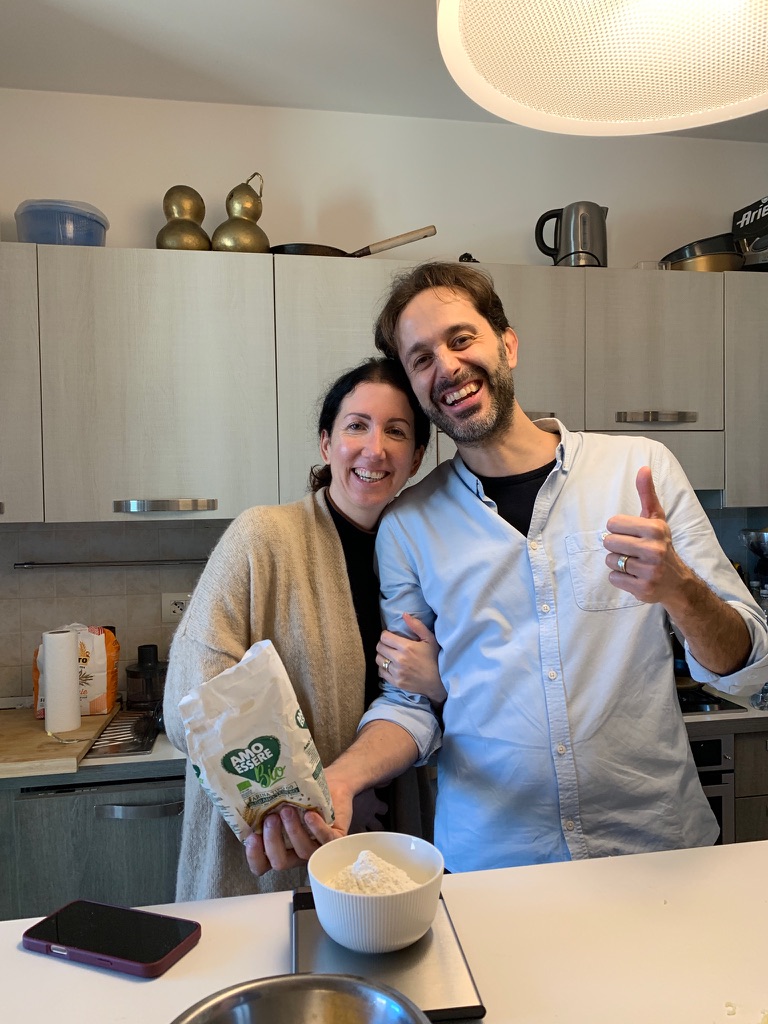
We met Chef Ismaele Di Blasi and his partner Aleah Ava at their home in Cave, a district of Foligno just a couple KM from our place. As Foligno is a small place, we were not too surprised to to discover the we know some of the same people. After the chit-chat, we moved into the kitchen.
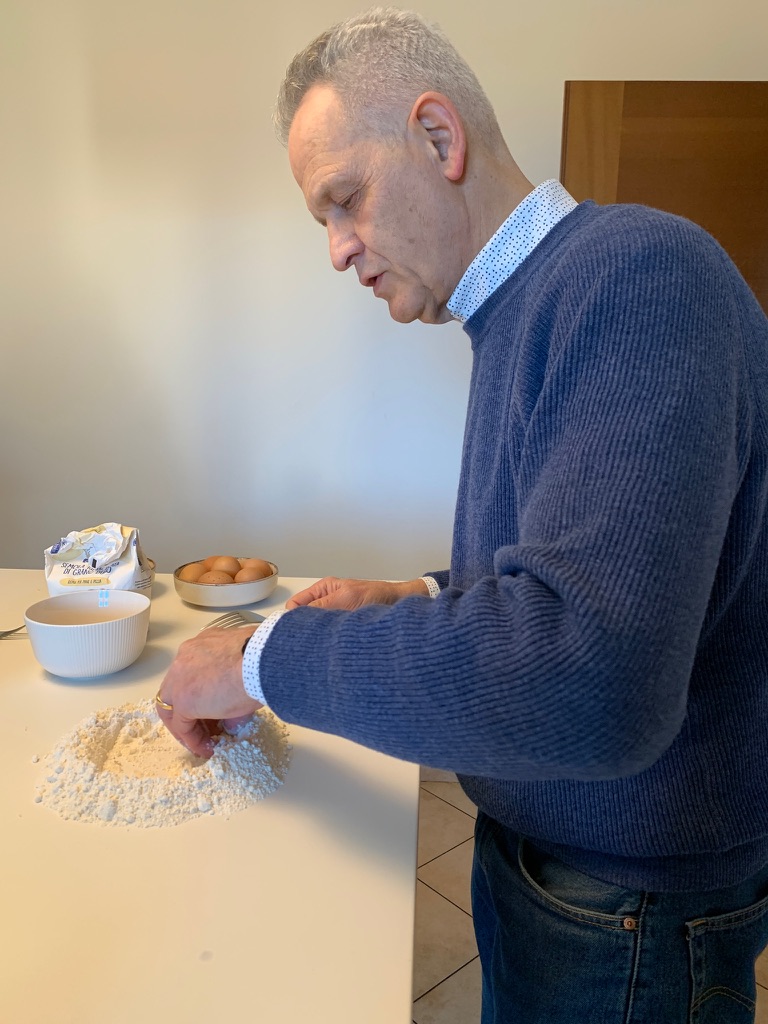
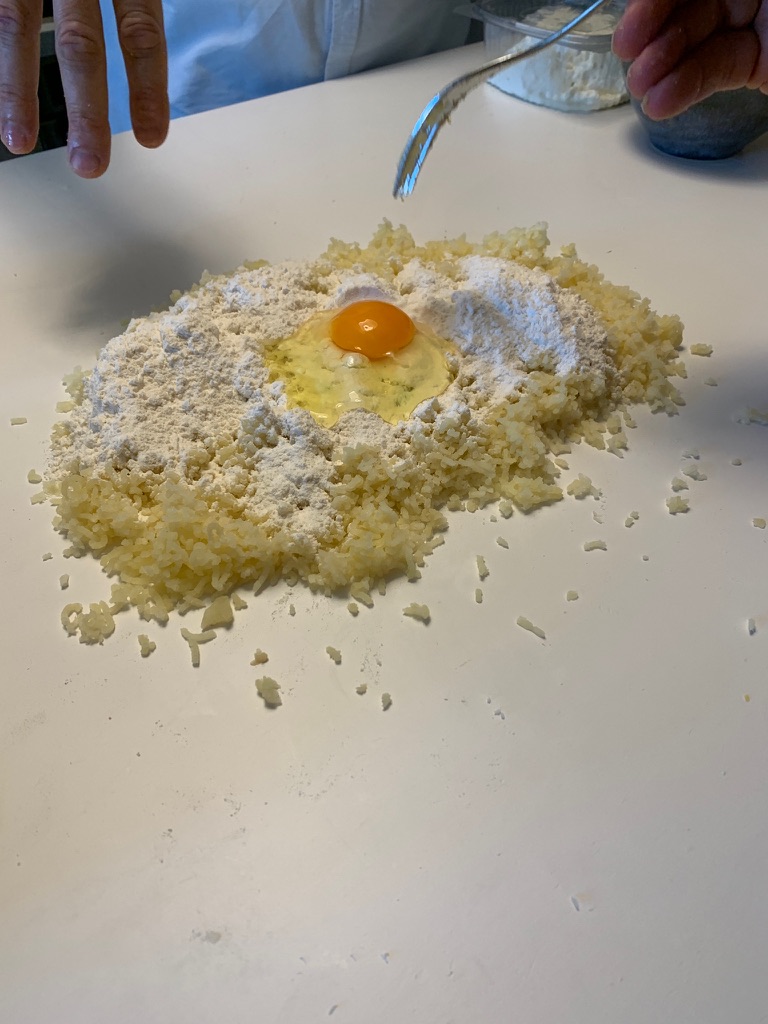
Ismaele explained the various types of flour, what to look for on the package (protein level, for example), and which ones are best for pasta. Now it was time to get down to business. We started out making all the pasta dough. James used regular flour and Virginia used a flour that had some whole wheat mixed in. One of the things we learned was to keep the “well” of flour low, as that makes it easier to incorporate the egg. If you use whole wheat, you often need two eggs as the flour is denser.
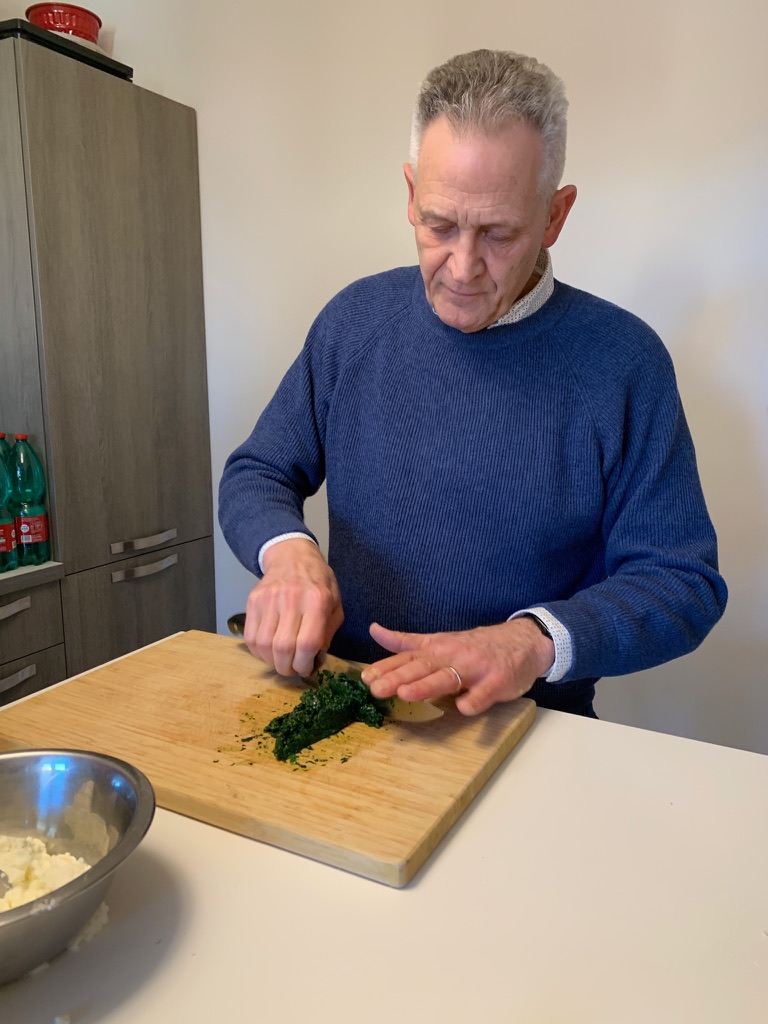
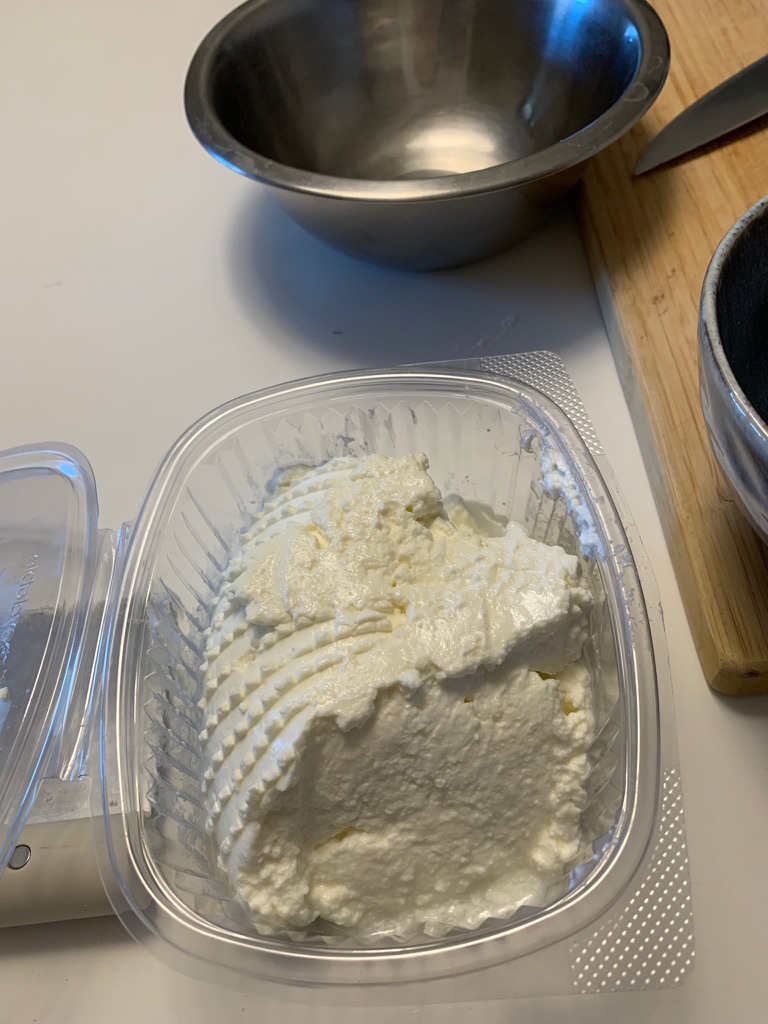
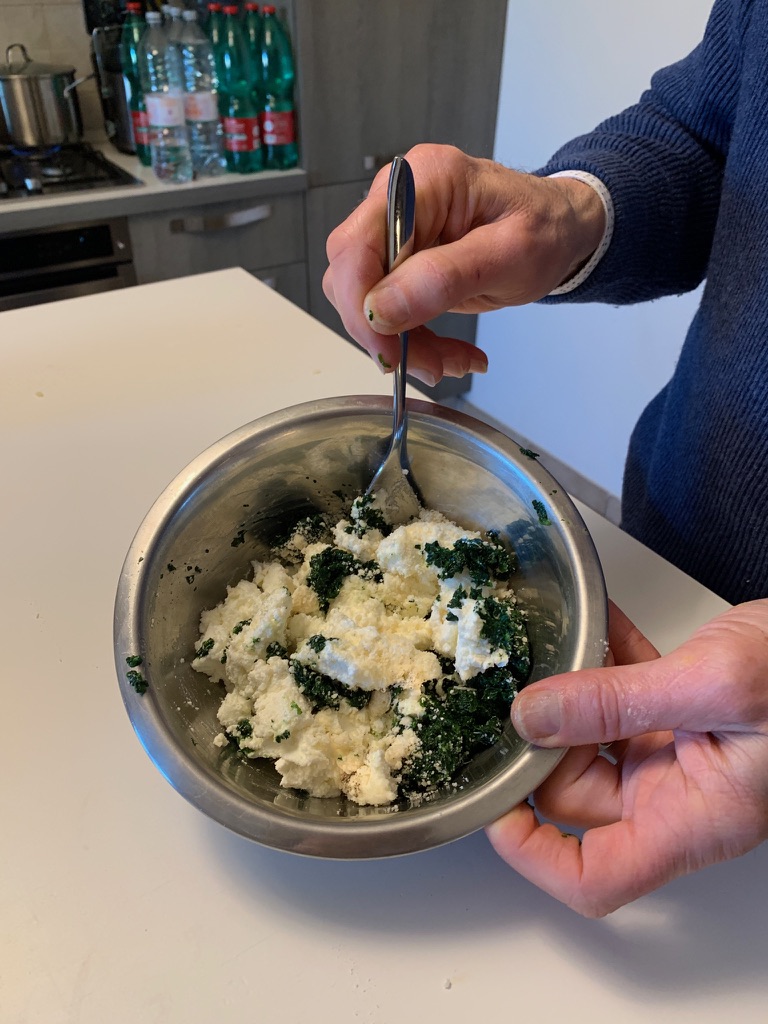
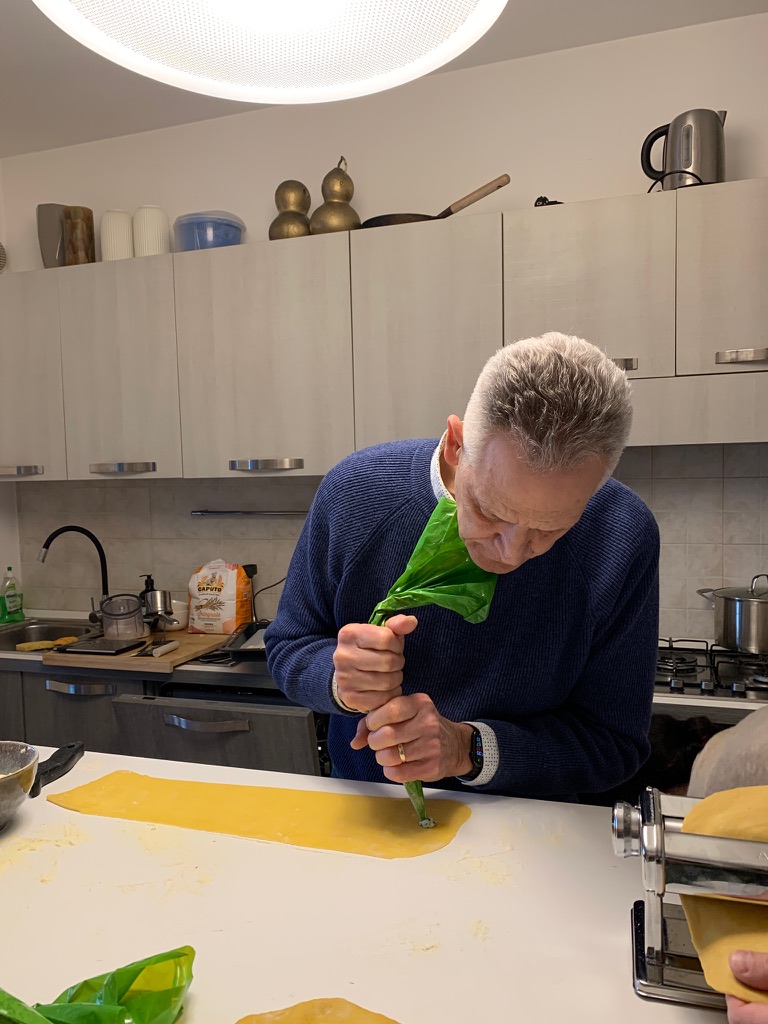
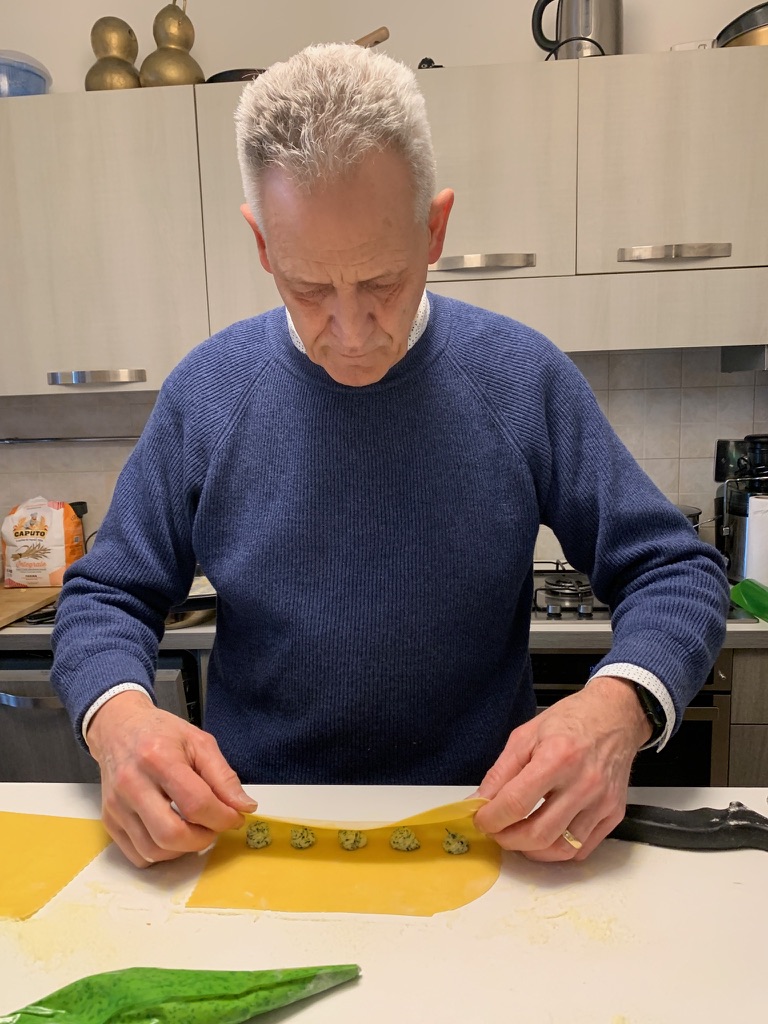
Next we made filling for Spinach and Ricotta Ravioli.
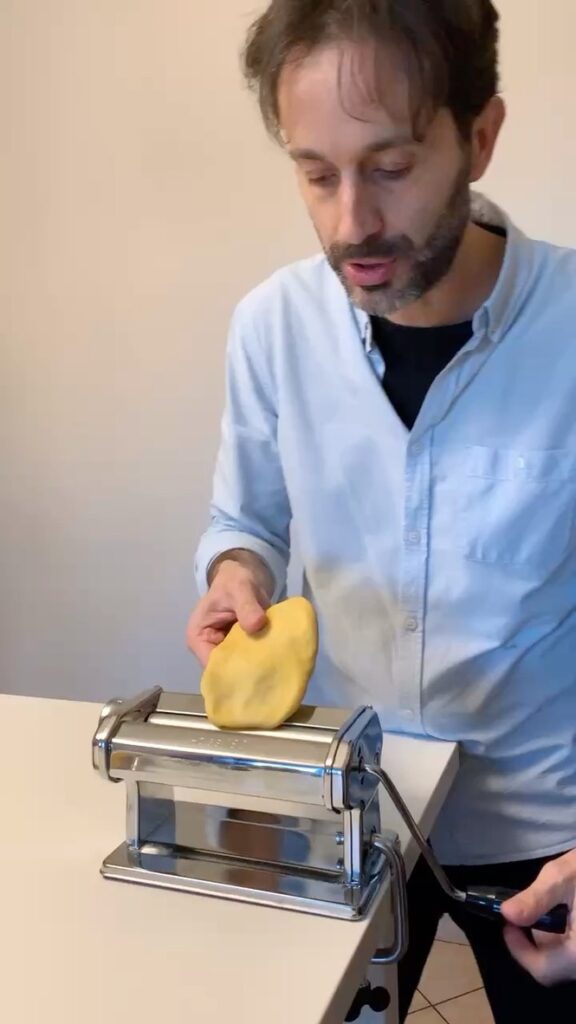
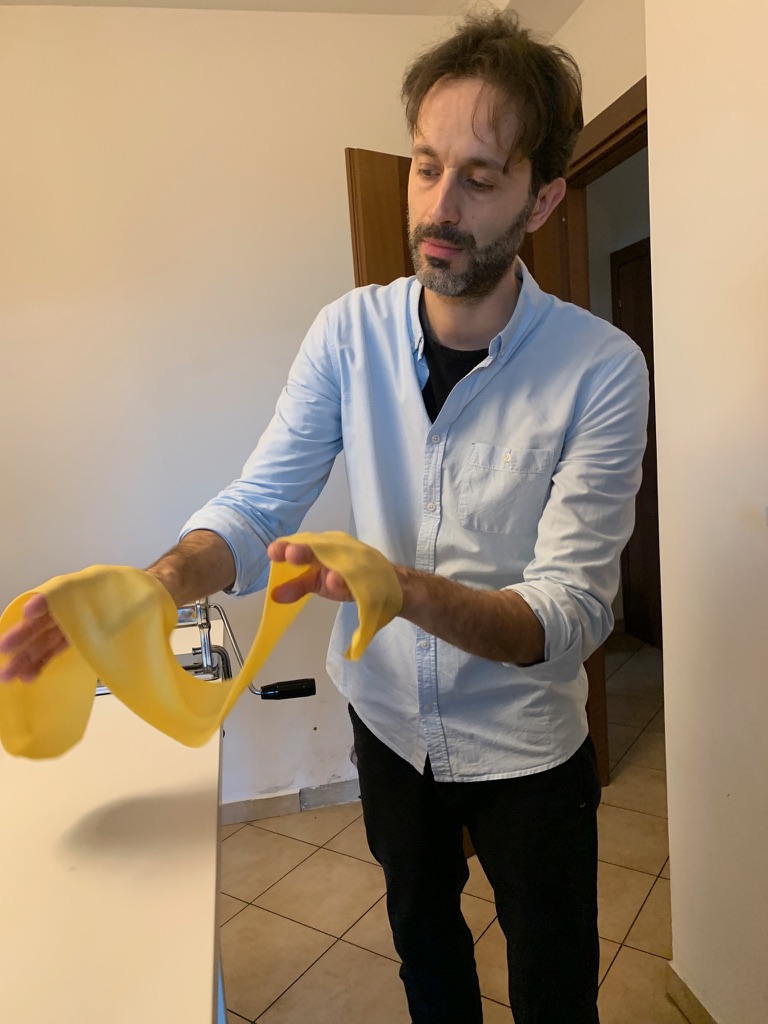
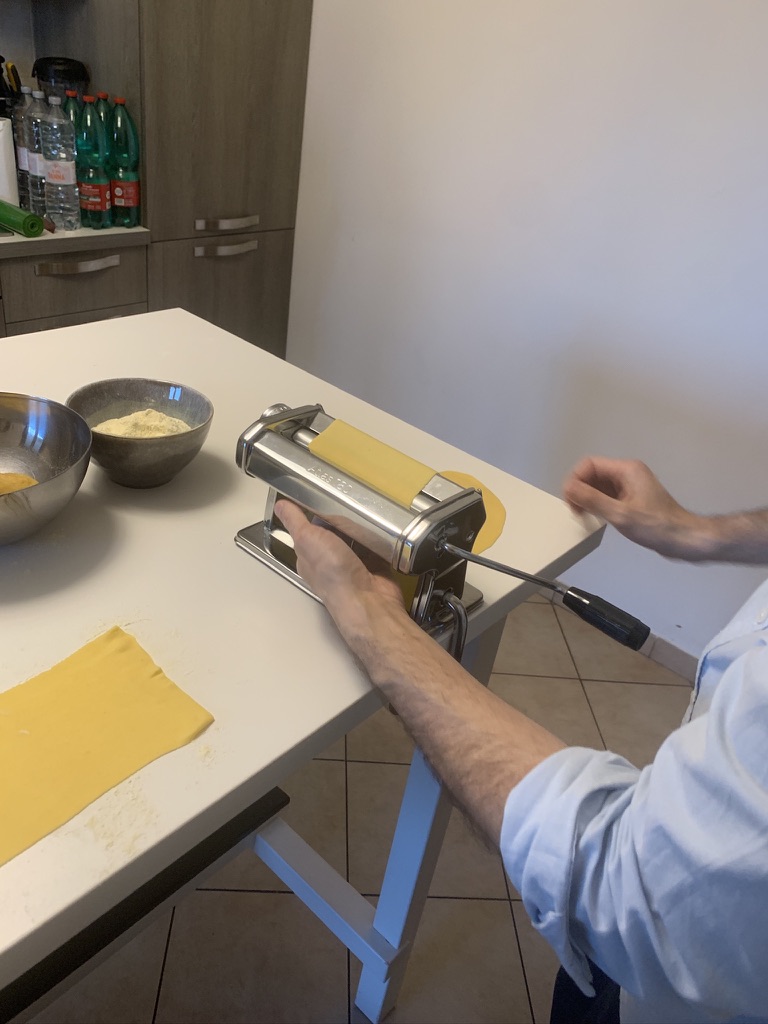
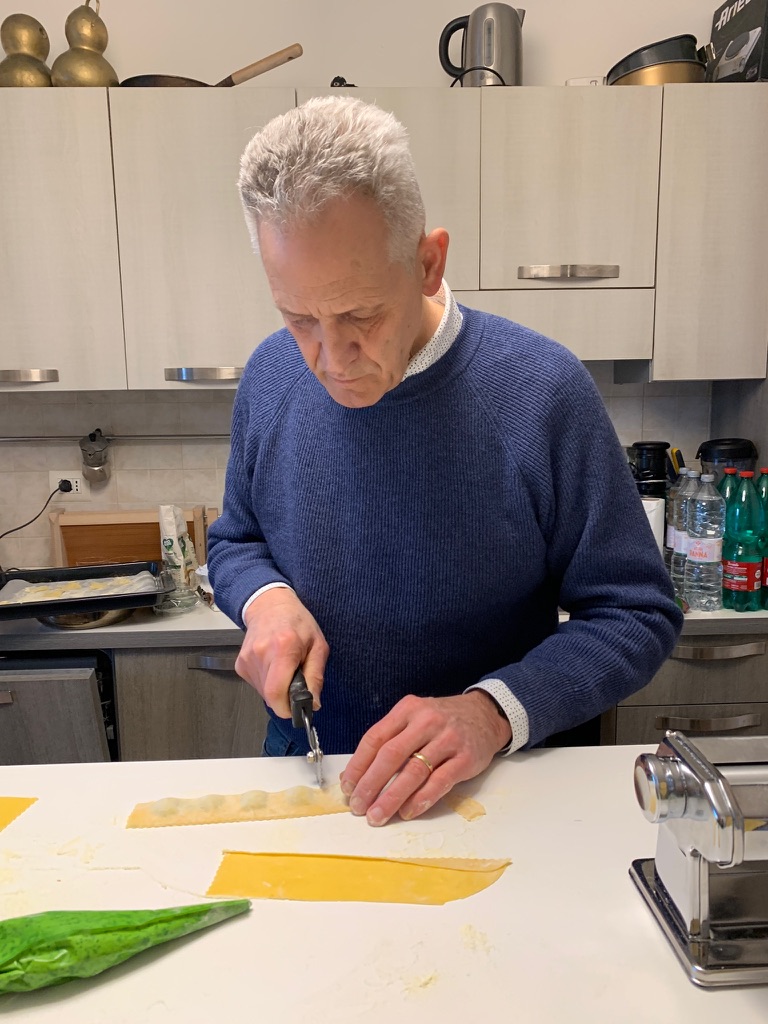
Now it was time to roll some pasta and make ravioli. Ismaele recommended cutting the pasta sheets into smaller sections as we went along to keep the sheets from becoming too long and unmanageable.
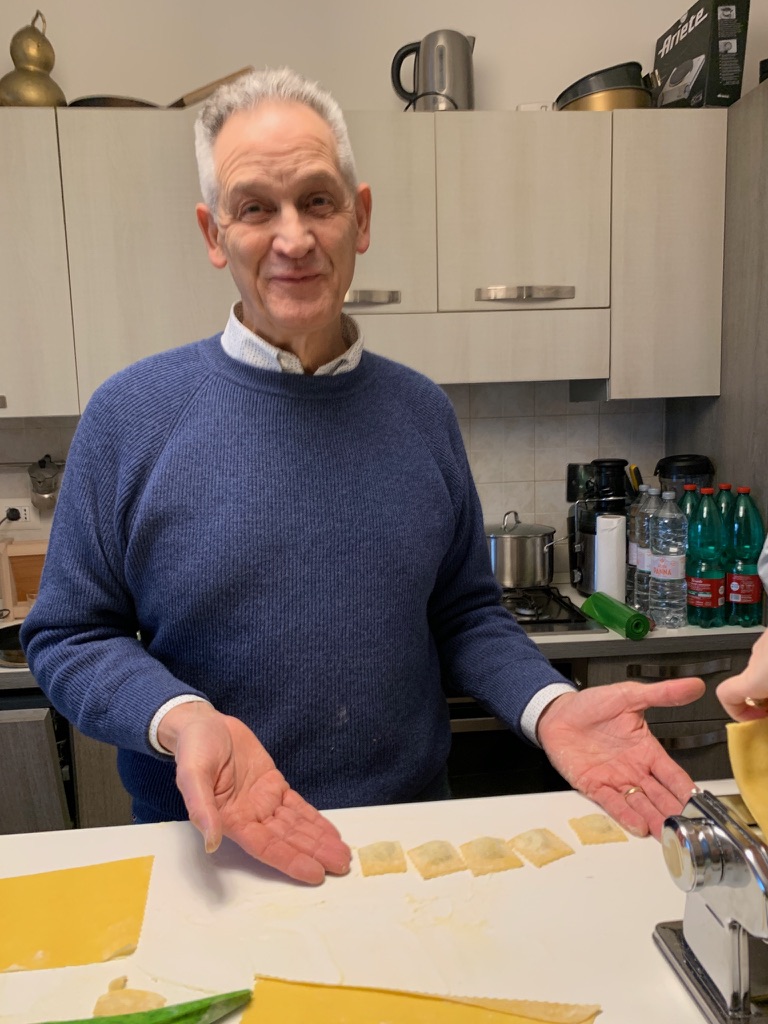
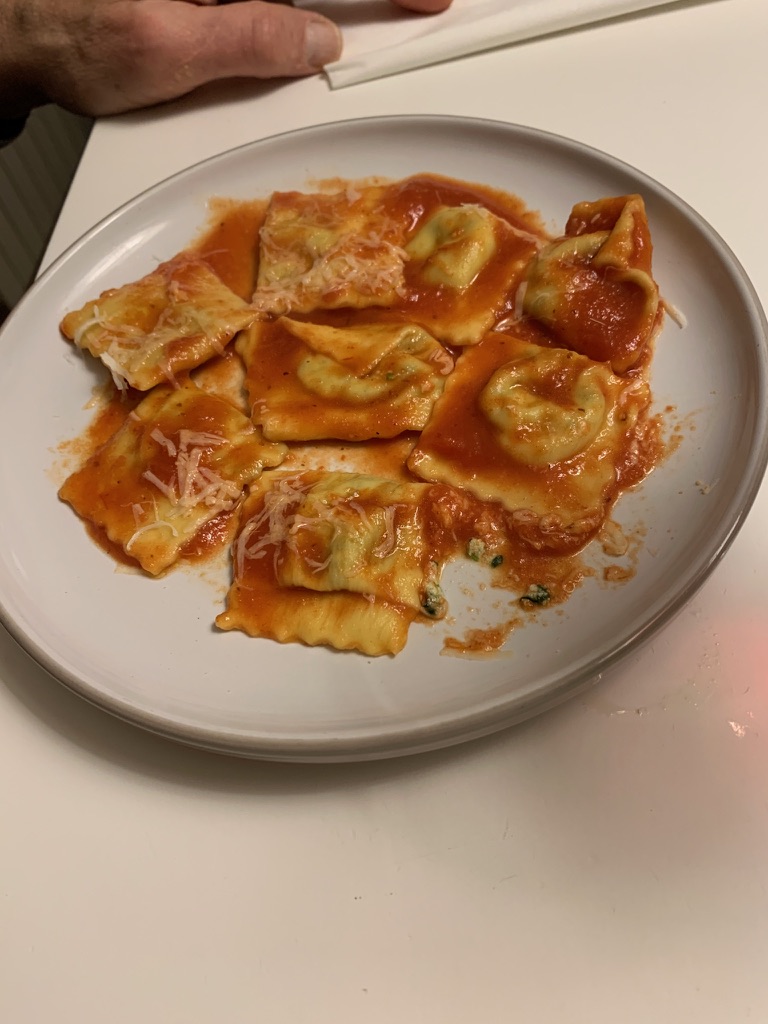
After we made the pasta, we made Ravioli and Plin. Plin are shaped a bit differently because they are pinched at the ends. We usually see them in Northern Italy.
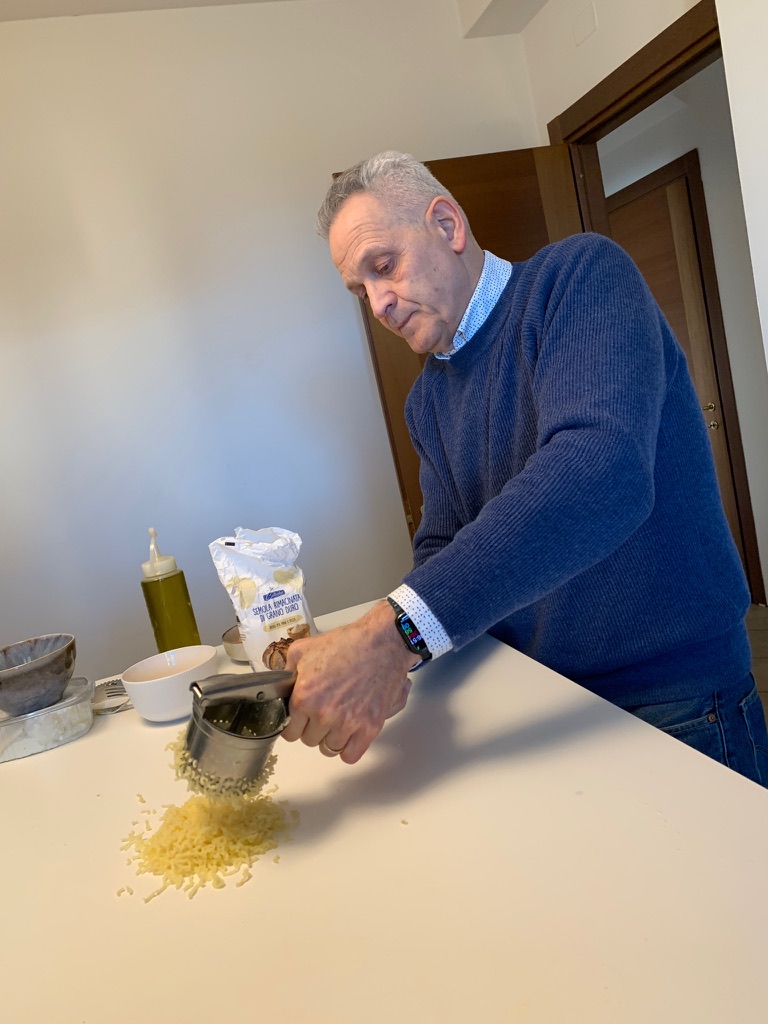
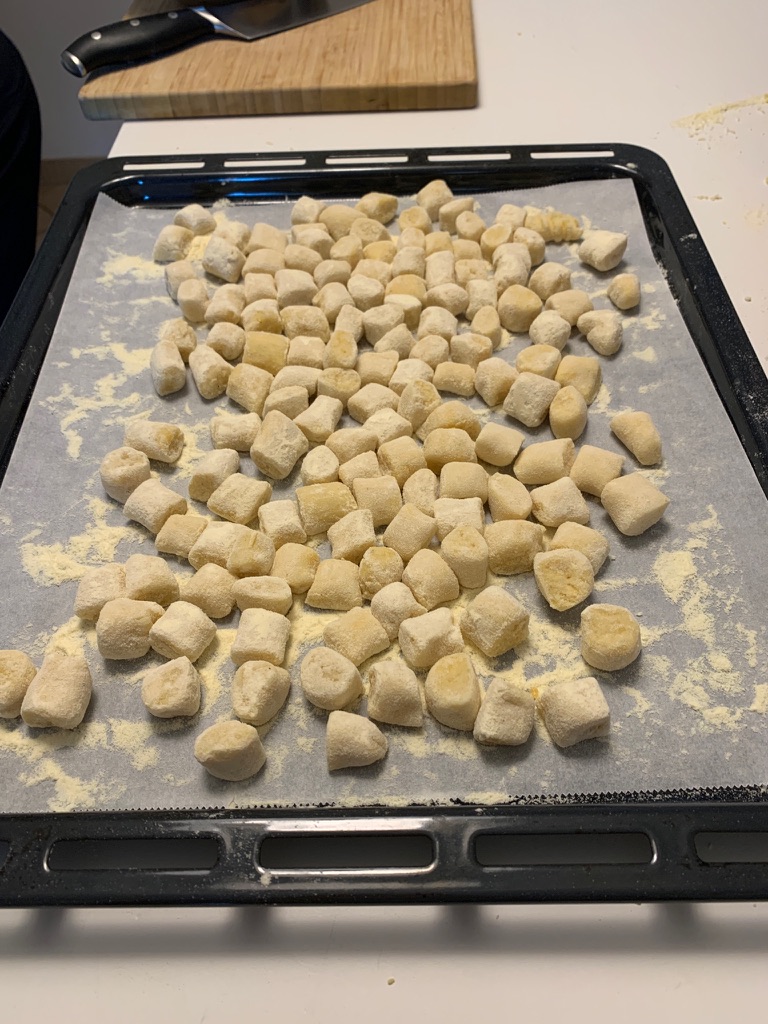
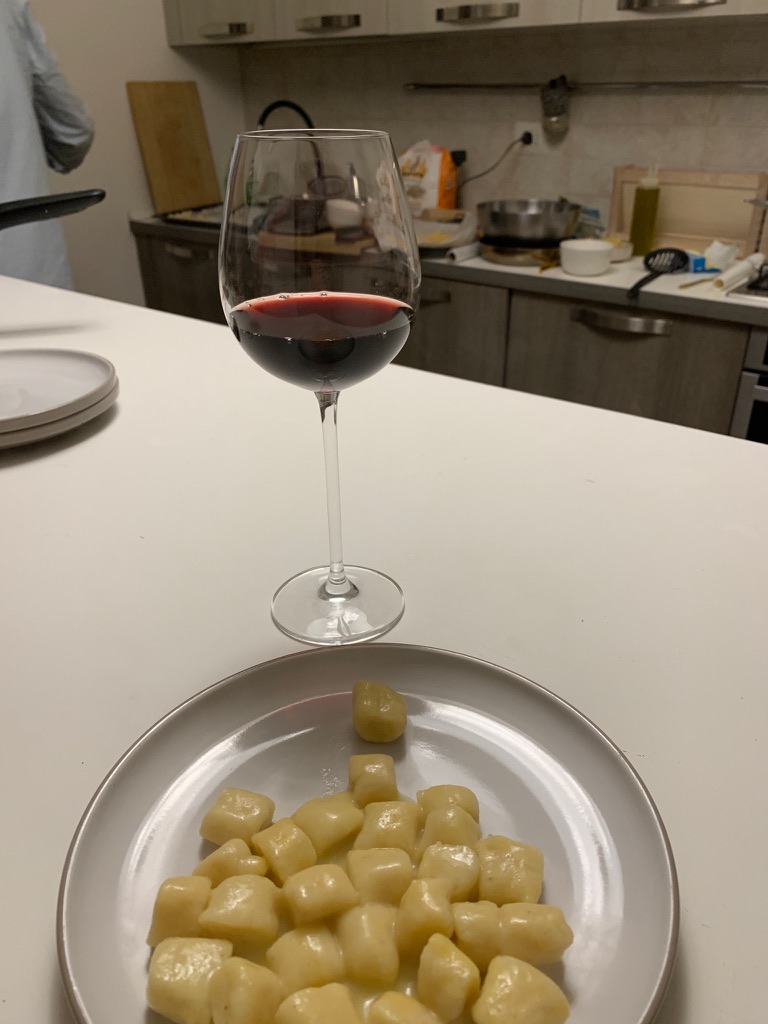
As the Ravioli rested, we made gnocchi. Ismaele recommended using red potatoes, cooking them with the skins on, and letting them cool in the fridge. We used a ricer, then added the flour and egg. Once they were the right consistency, we took small sections, rolled them and then cut them. It was a bit like playing with Play-doh.
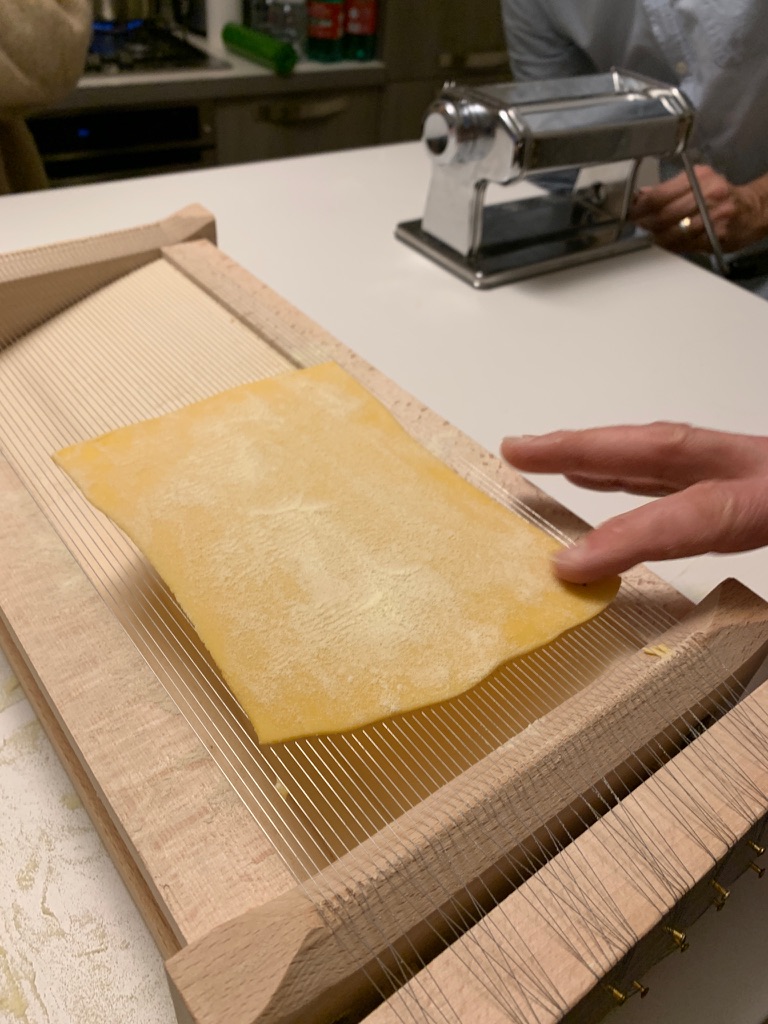
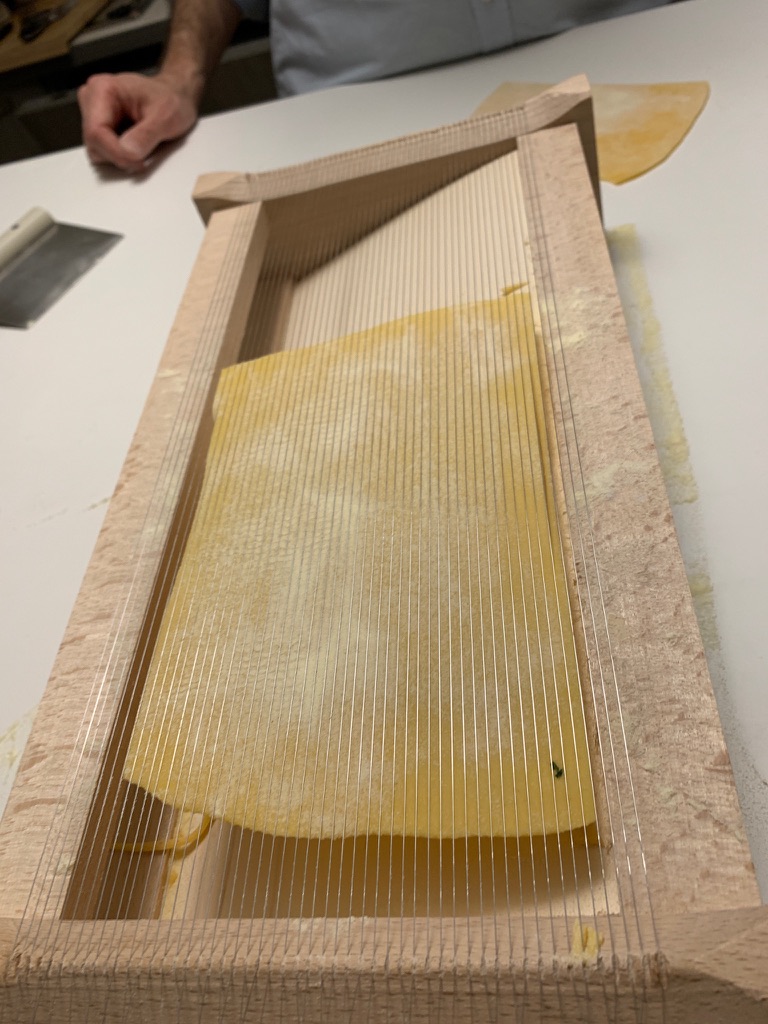
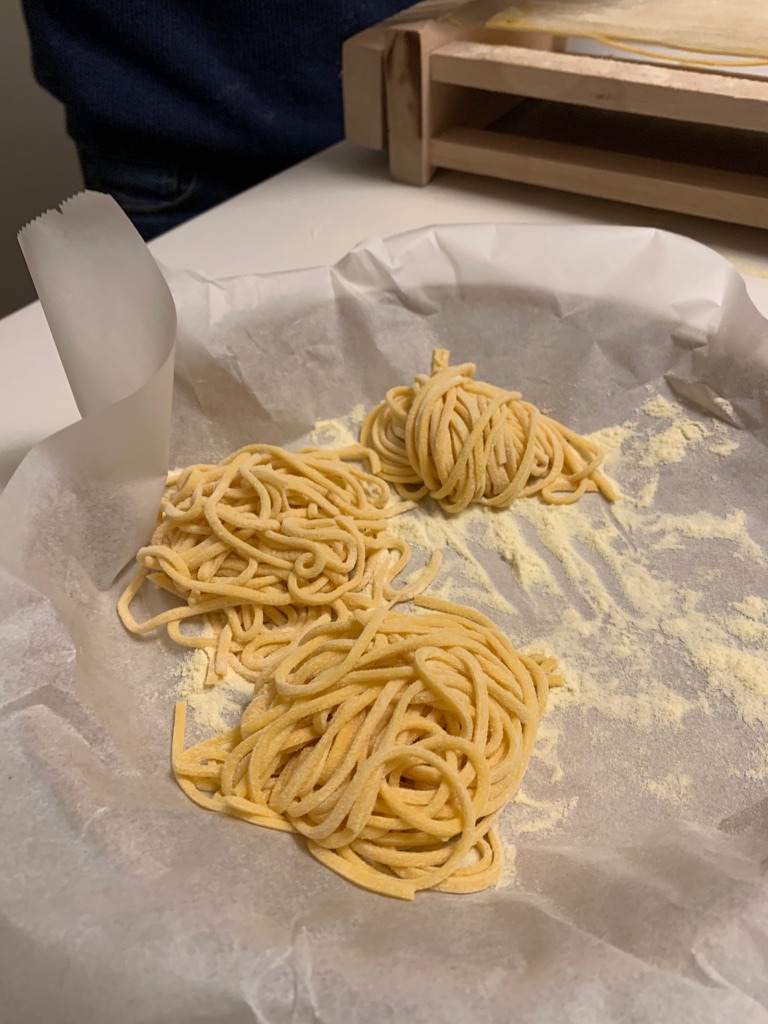
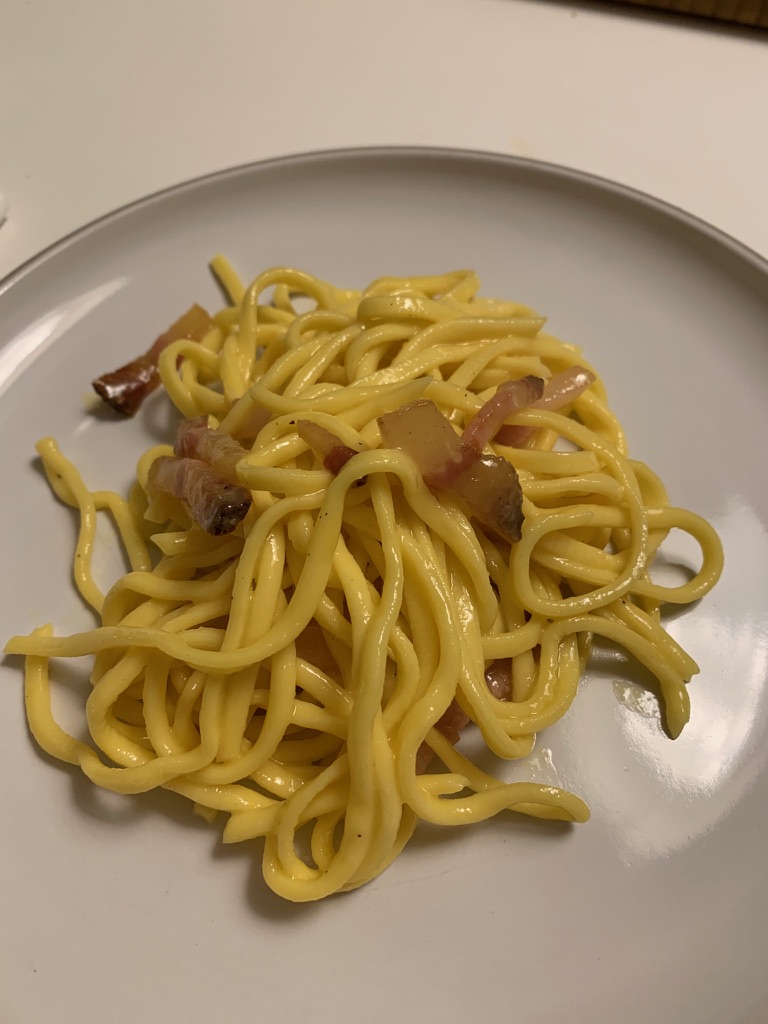
The last pasta we made was spaghetti alla guitarra. For this one, we took the pasta sheet and laid it on a “guitarra”, then used a rolling pin to roll the dough through the “strings”. To release the dough, you pluck the “strings”. For this pasta, we had made a dough made with semolina flour.
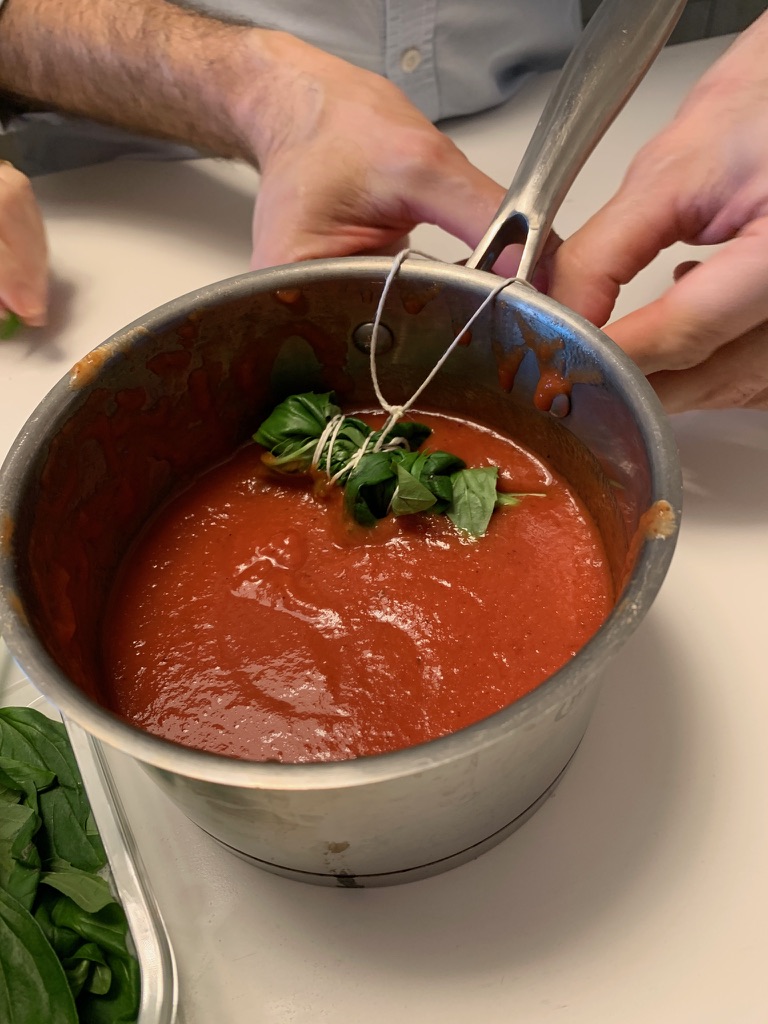
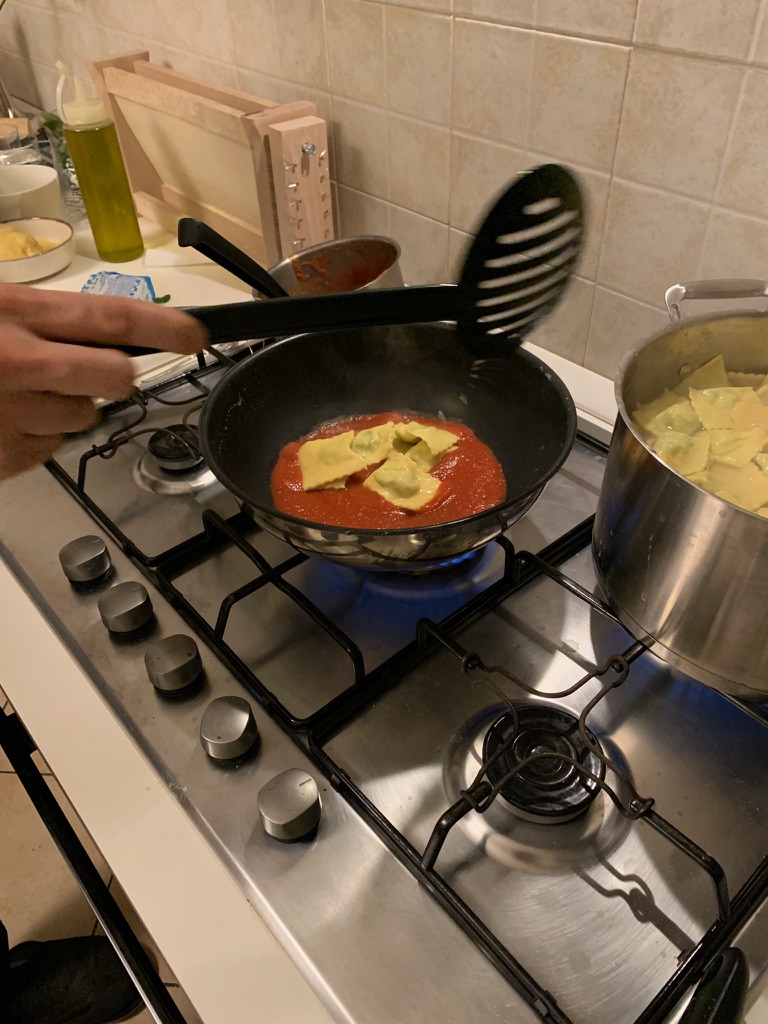
Our next step was to make the sauces. For the Ravioli we made a tomato basil sauce. We used roasted cherry tomatoes along with some diced tomatoes and whirred them in a mini blender. Instead of chopping up the basil and adding it to the sauce, Ismaele made a bouquet garni with the basil and tied it to the handle. Very clever.
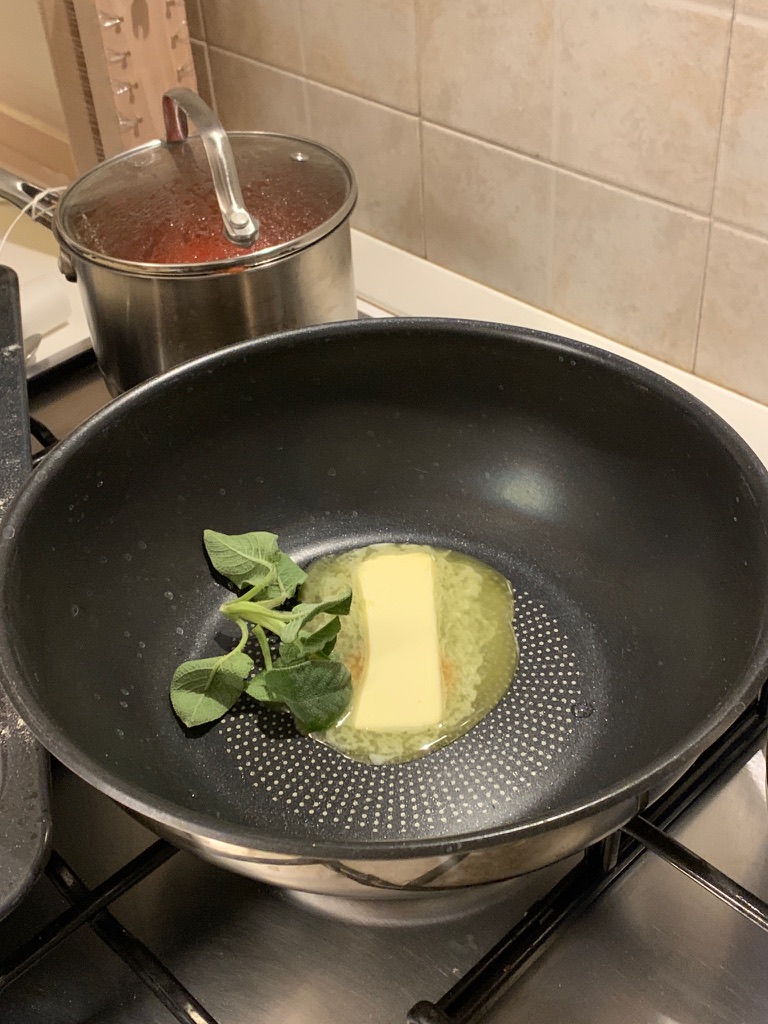
We were getting hungry by this point, so it was time to boil the water for the gnocchi. As this was boing, we also put the butter and sage in a pan for the sage butter sauce. When the gnocchi come to the top they’re done.
Next, we made the Ravioli. Same deal, when they come up, they’re done.
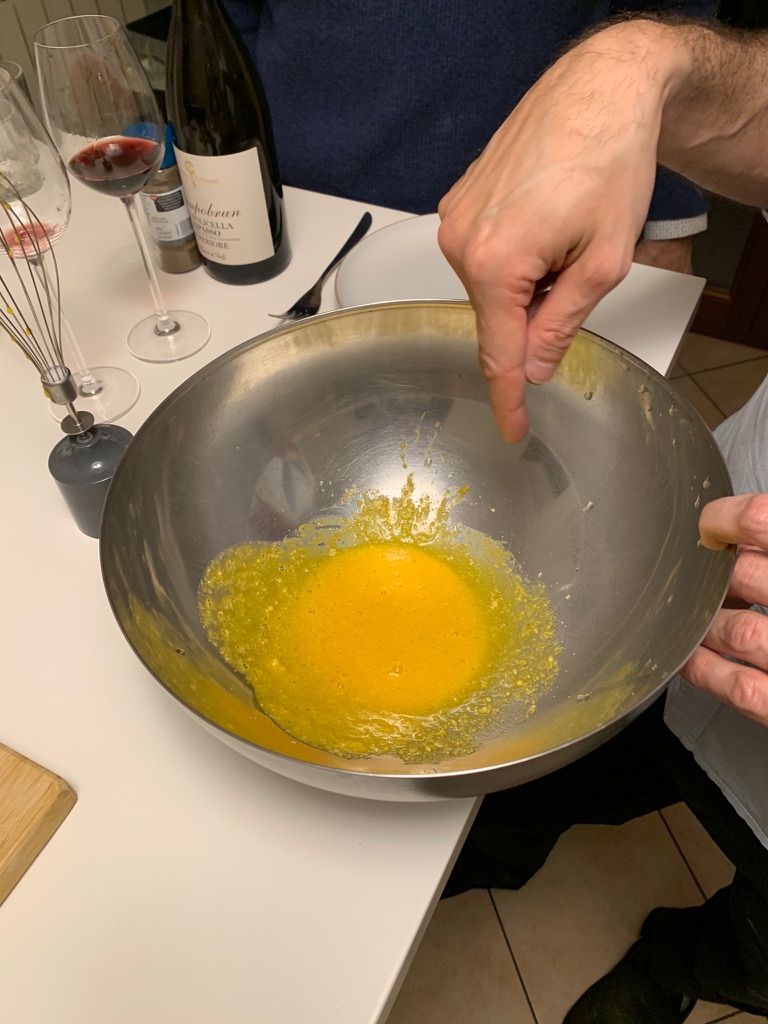
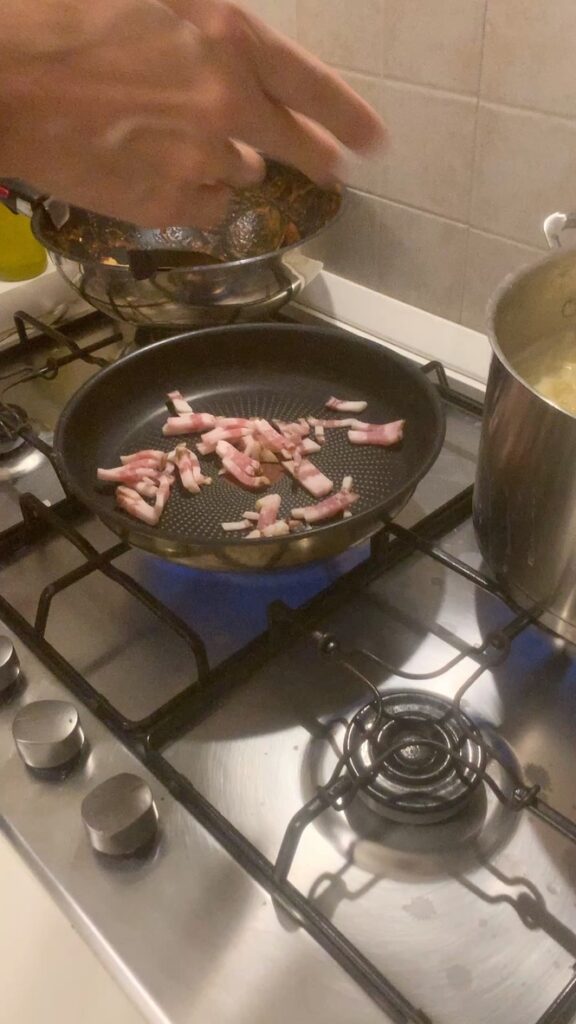
We finished by making a carbonara sauce for the spaghetti alla guitarra. Scramble the egg, add a bit of salt, some of the pasta cooking water, then the cooked pasta. Top with guanciale. We enjoyed the meal with a glass of valpolicella
We thoroughly enjoyed our experience with Ismaele and Aleah, and we’re looking forward to doing more with them in the future.