The International Food Festival – Foligno – March 20th
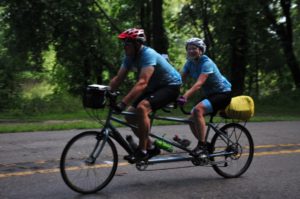
Foligno is an amazing place. It’s a working-class town of about 60,000 people which is often ignored in Italian travel literature. It’s barely mentioned alongside nearby towns such as Assisi, Spoleto, Spello and Perugia. The Tandem Spirits have been living here since 2014 and before the pandemic, we enjoyed the many festivals and events that Foligno hosted. Fortunately, it seems that we are returning to a “new normal.” We thought you would enjoy seeing some of the activities from March.
Chocolate Festival - March 4-6
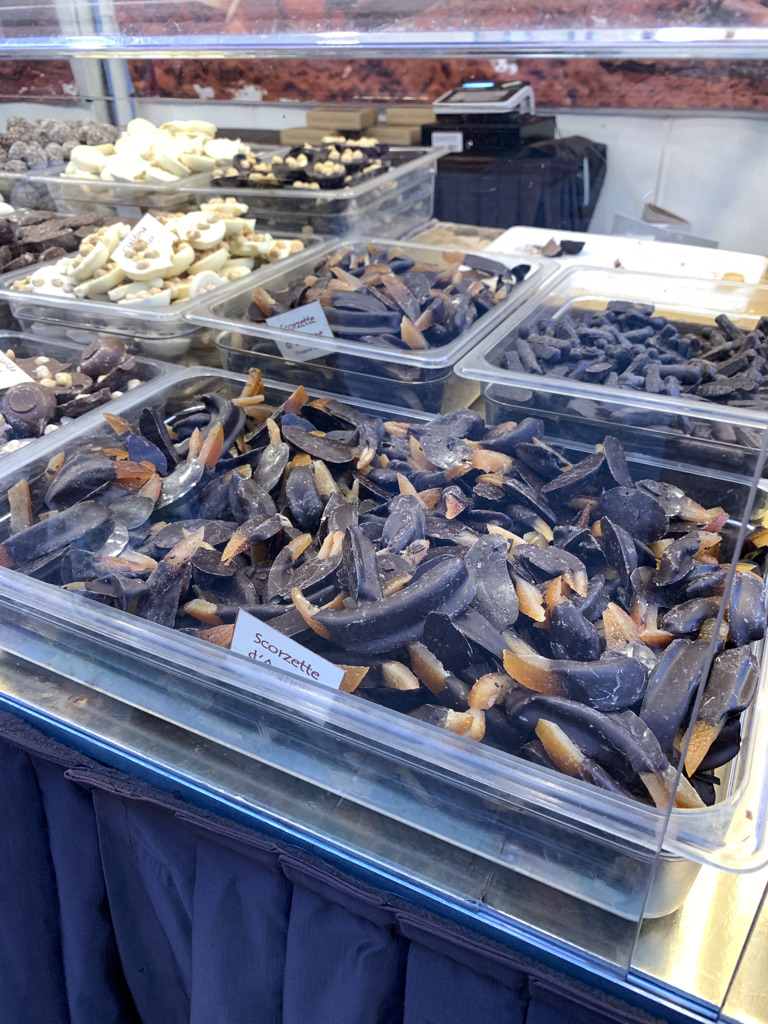
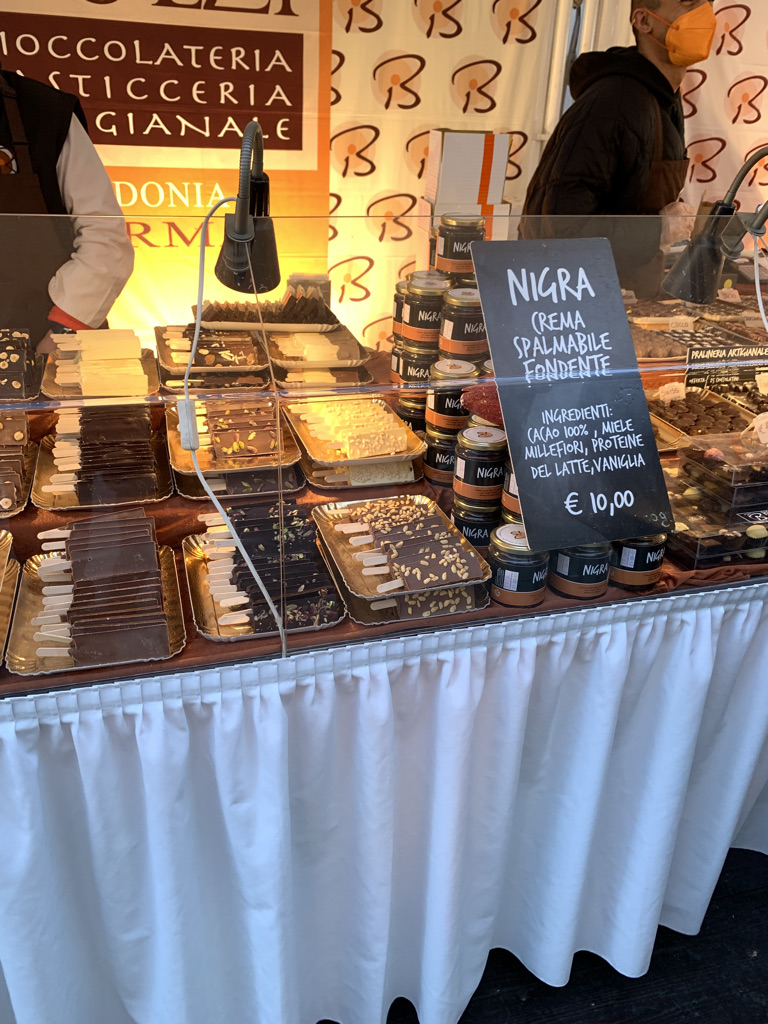
Foligno held a chocolate festival at the beginning of March. Even though the weather was cold and windy, there was a nice crowd out, fully prepared to enjoy the treats the vendors were offering. It was even more fun for us because Nancy and Tom, friends from Seattle, were visiting.
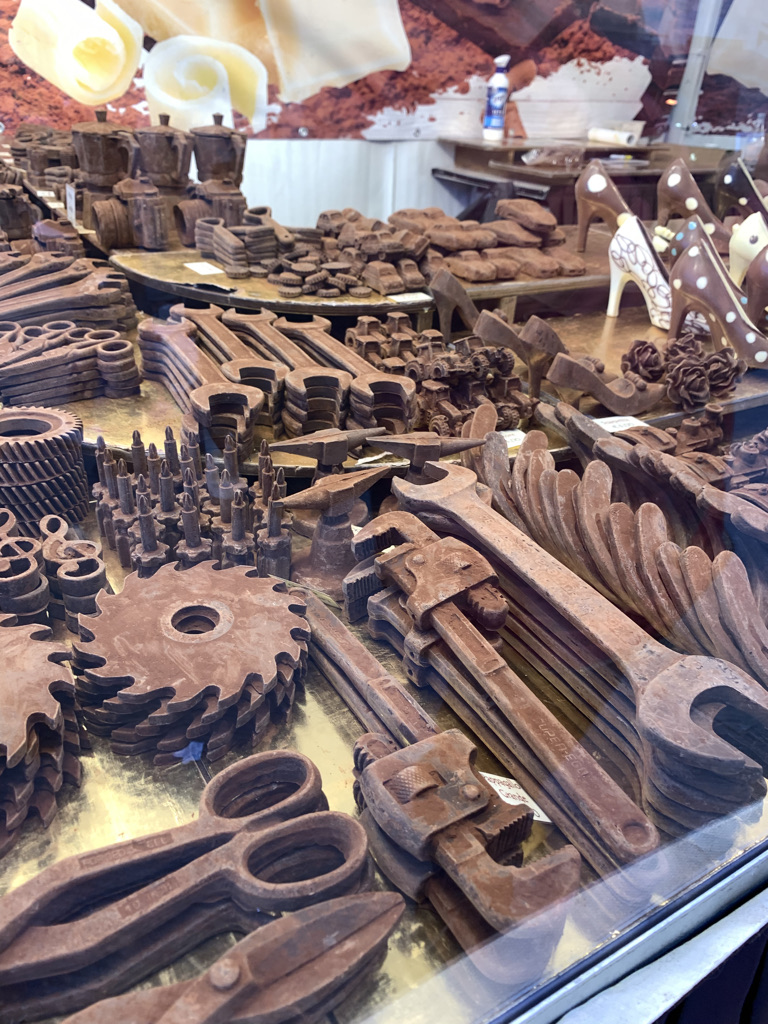
Yes, these are chocolate tools!!!
And these are some fancy chocolate shoes!!!!
International Food Festival - March 19-21
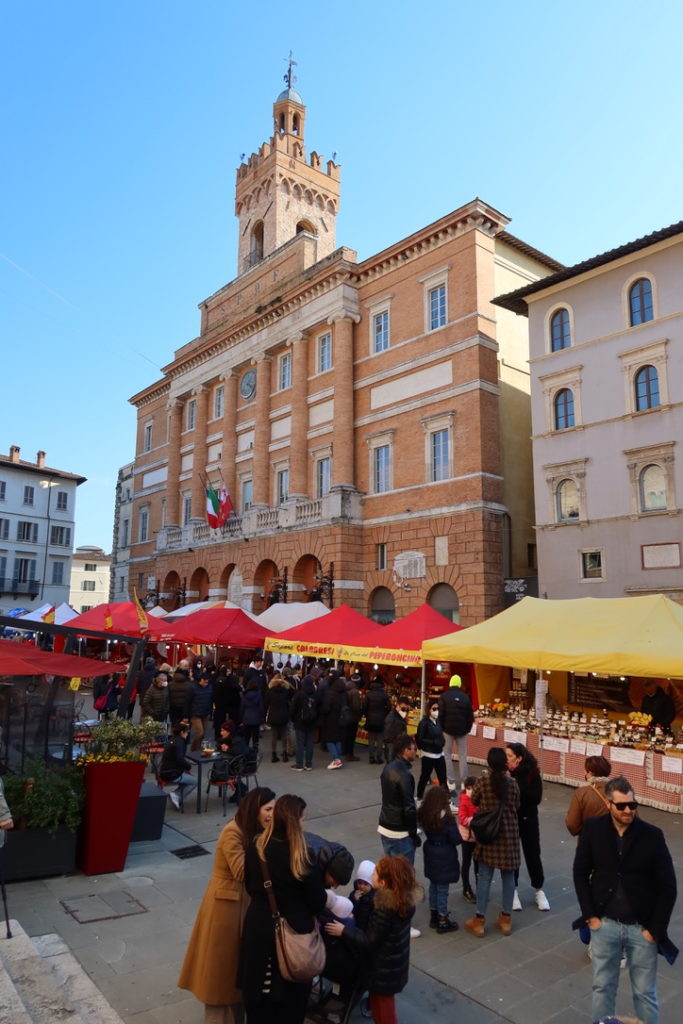
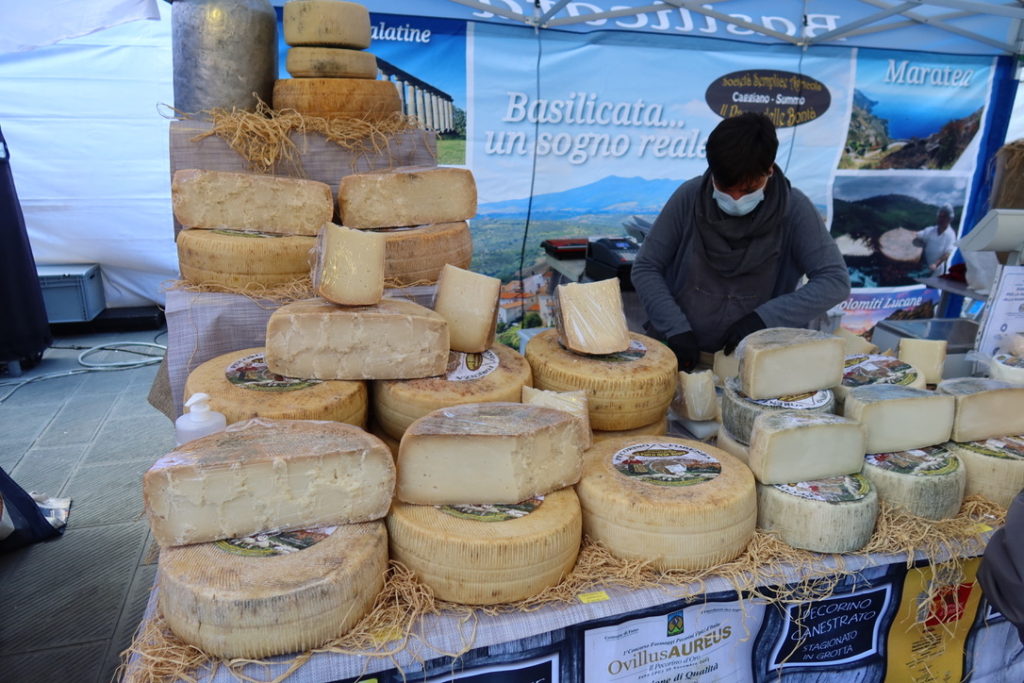
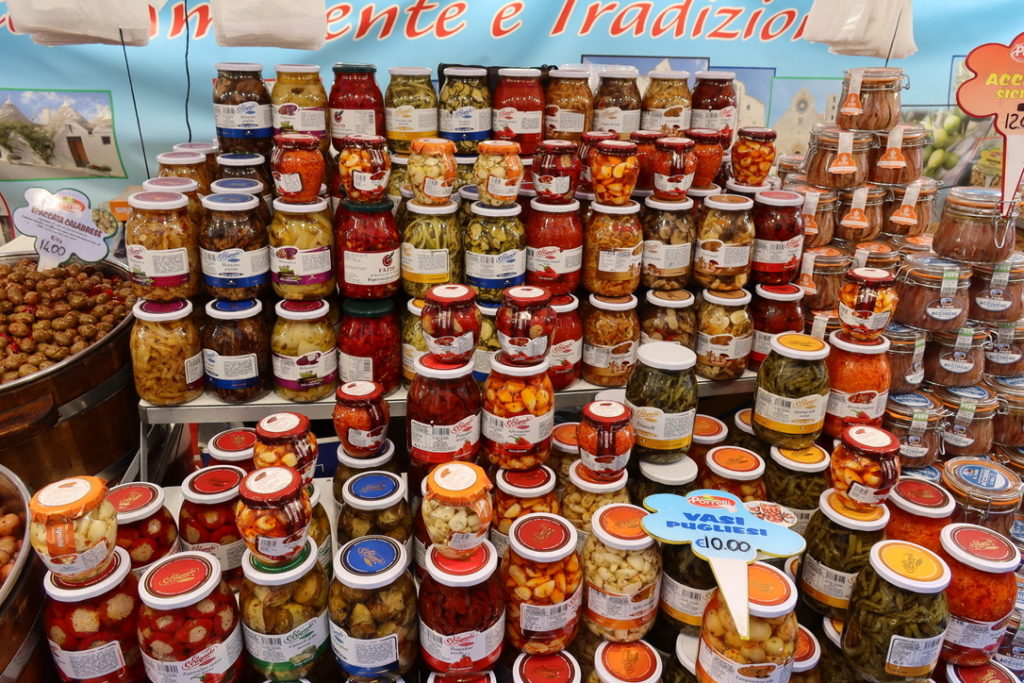
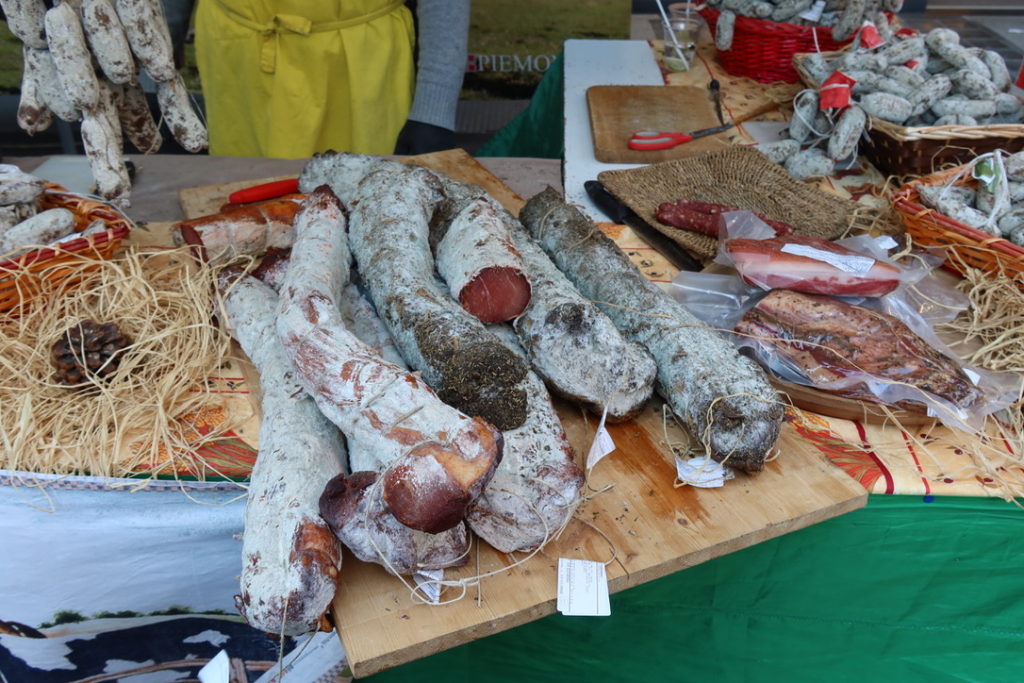
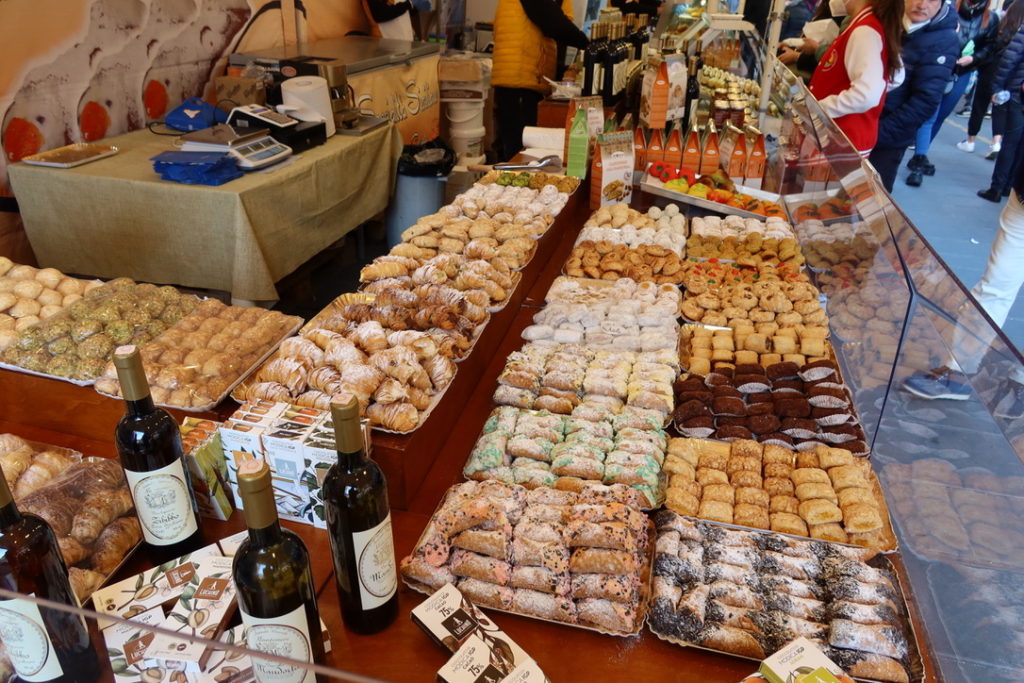
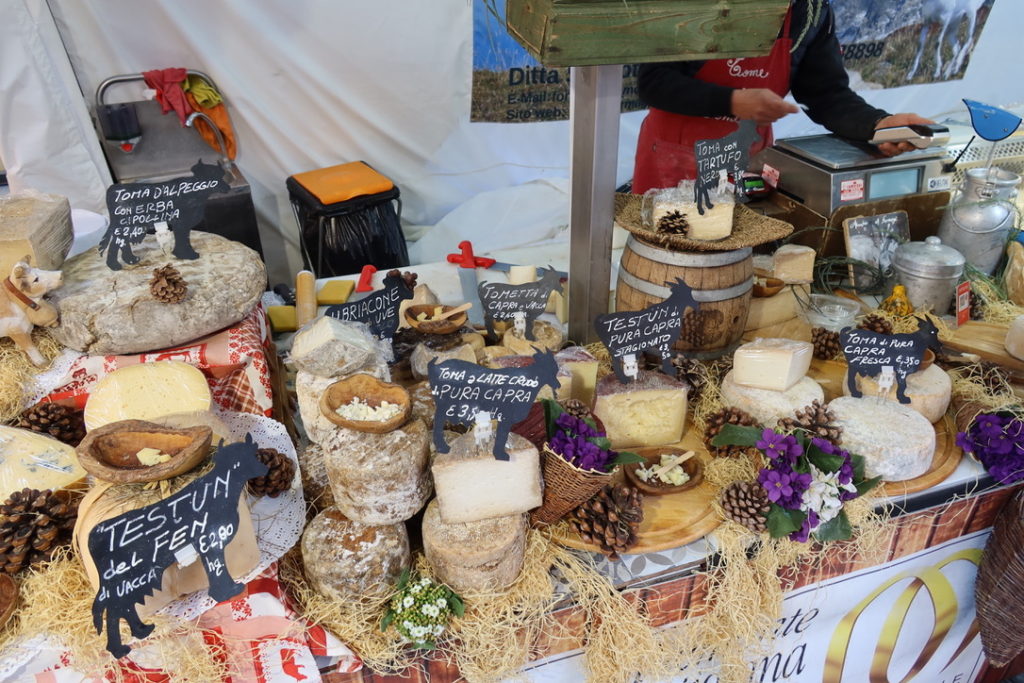
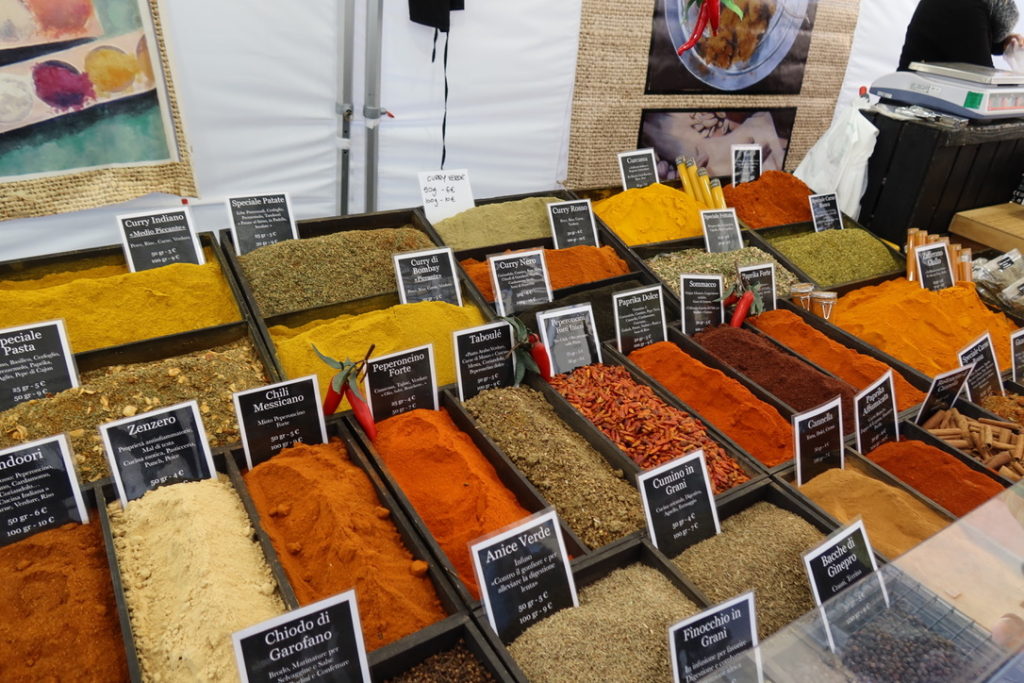
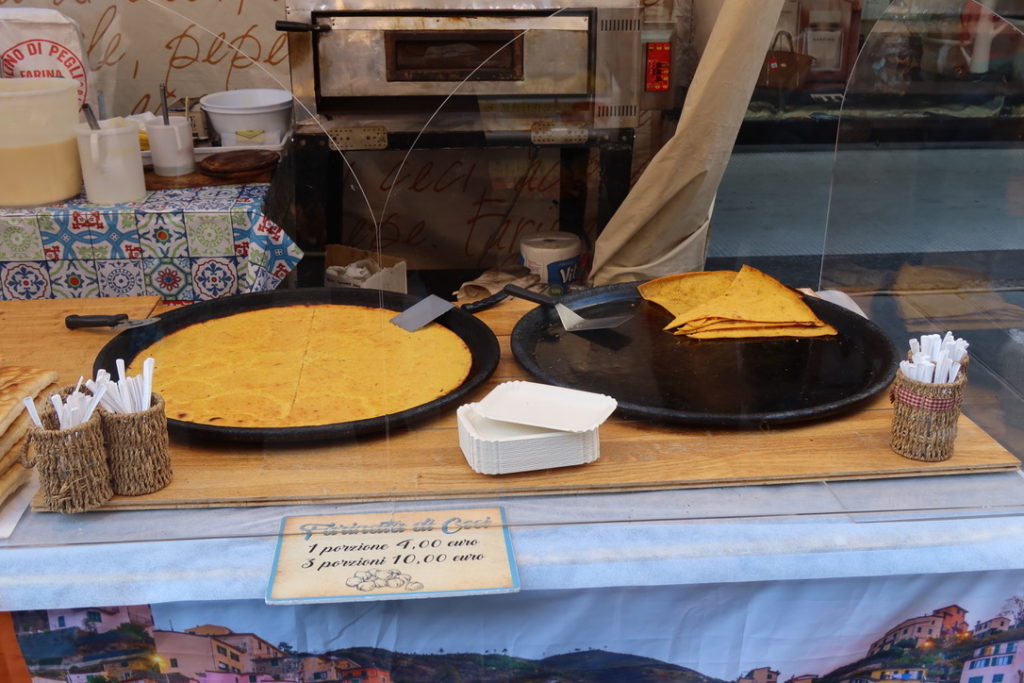
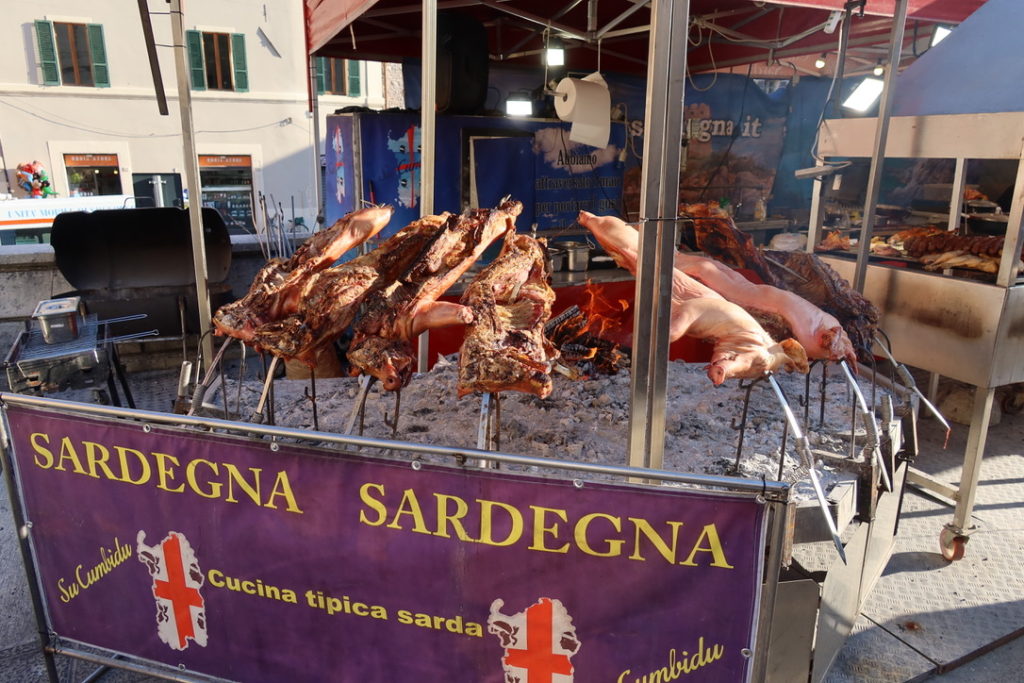
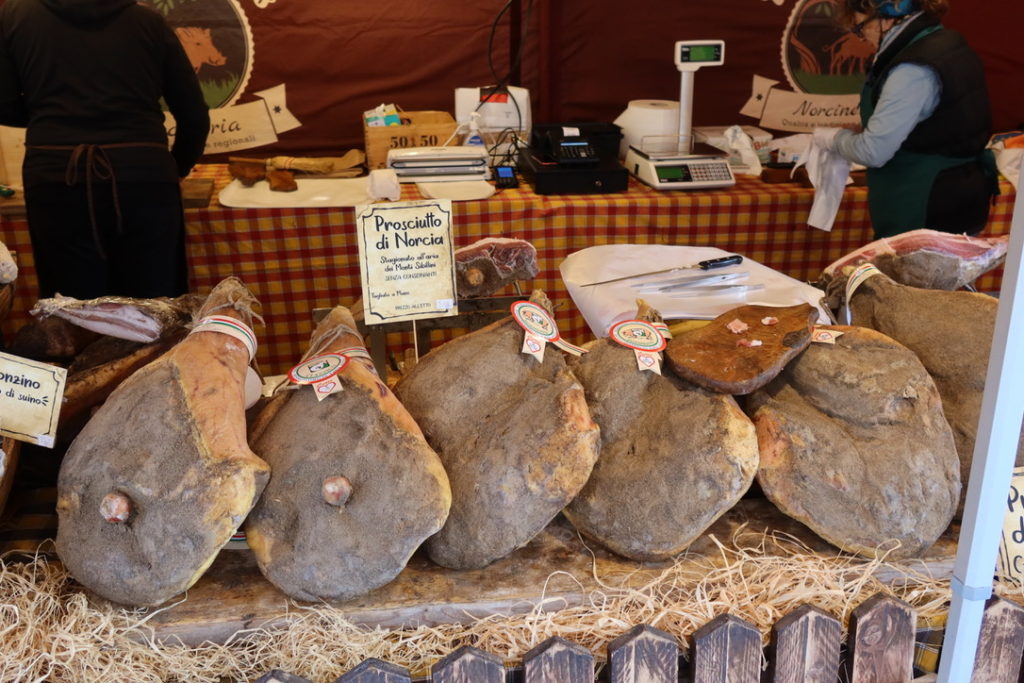
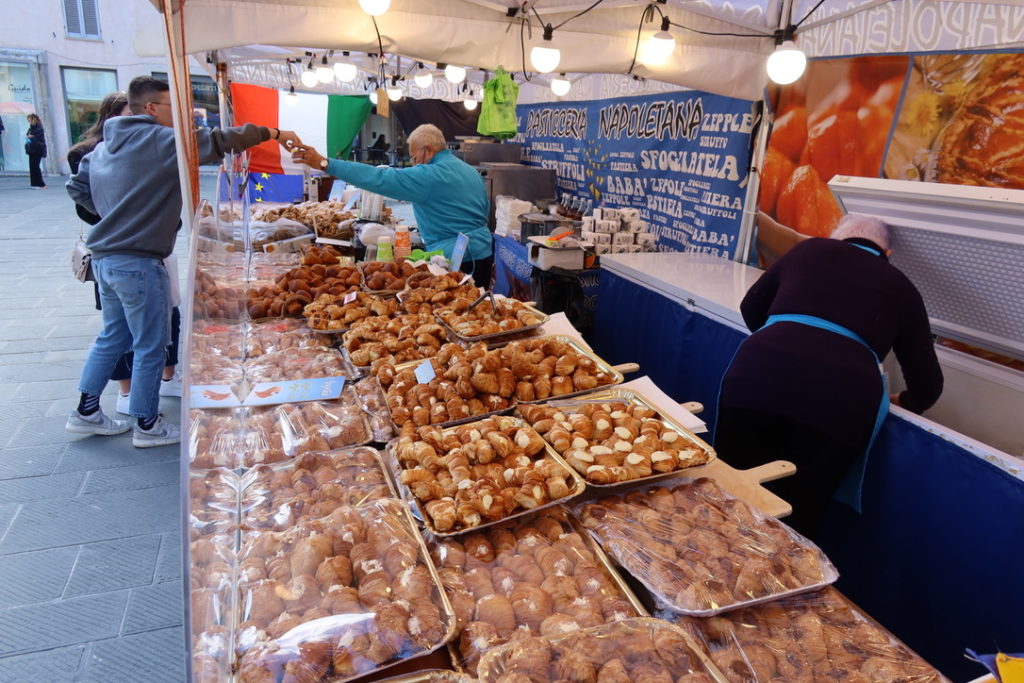
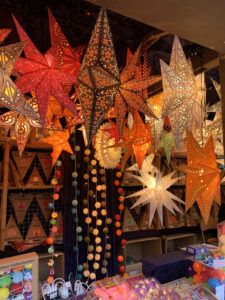
There are usually several food festivals in Foligno’s historic center every year. We really missed having them because they offer everyone an opportunity to sample non-local Italian foods along with German, Austrian, Mexican and other cuisines. Thankfully, we think they will be back this year. As you’ll notice in the pictures, everyone was bundled up because it was still cold. Nevertheless, there was a good-sized crowd and people were obviously enjoying themselves!
FAI - Fondo Ambiente Italiano National Trust of Italy
Every year, FAI, the National Trust of Italy sponsors events throughout Italy that are intended to educate the public about precious properties and monuments. FAI’s fundamental mission is to protect elements of Italy’s physical heritage which might otherwise be lost.
This year, the Tandem Spirits visited two venues in Foligno. The first was our town’s main park, Canapé. The other has been a mystery to us since moving here,
Canapé Park
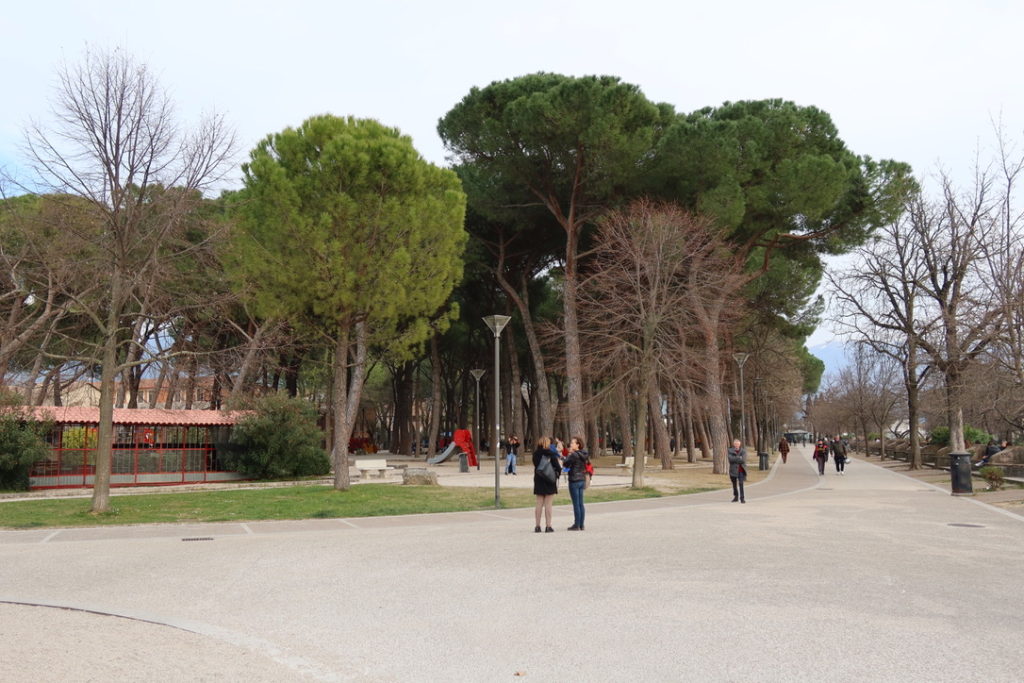
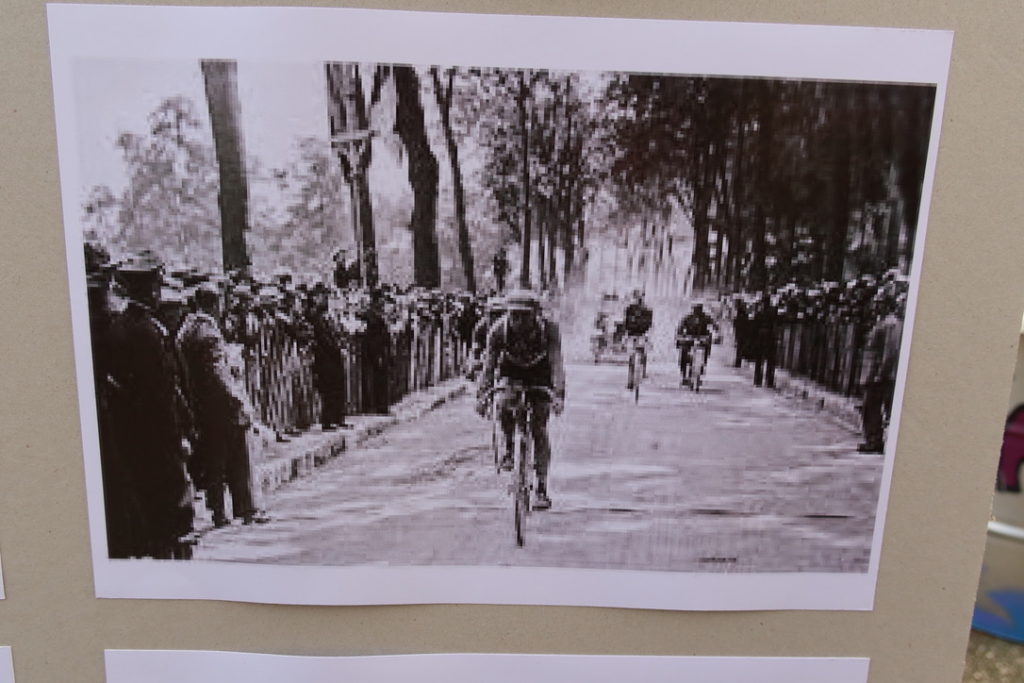
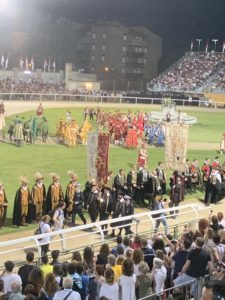
We have walked through this park many, many times and it’s a delightful space. And, it has a very interesting history. Over the centuries, the area where the park is located was place where where duels were fought, executions were carried out by guillotine or firing squad, as a Jewish cemetery, and a as a venue where equestrian jousts were held.
Canapé Park today
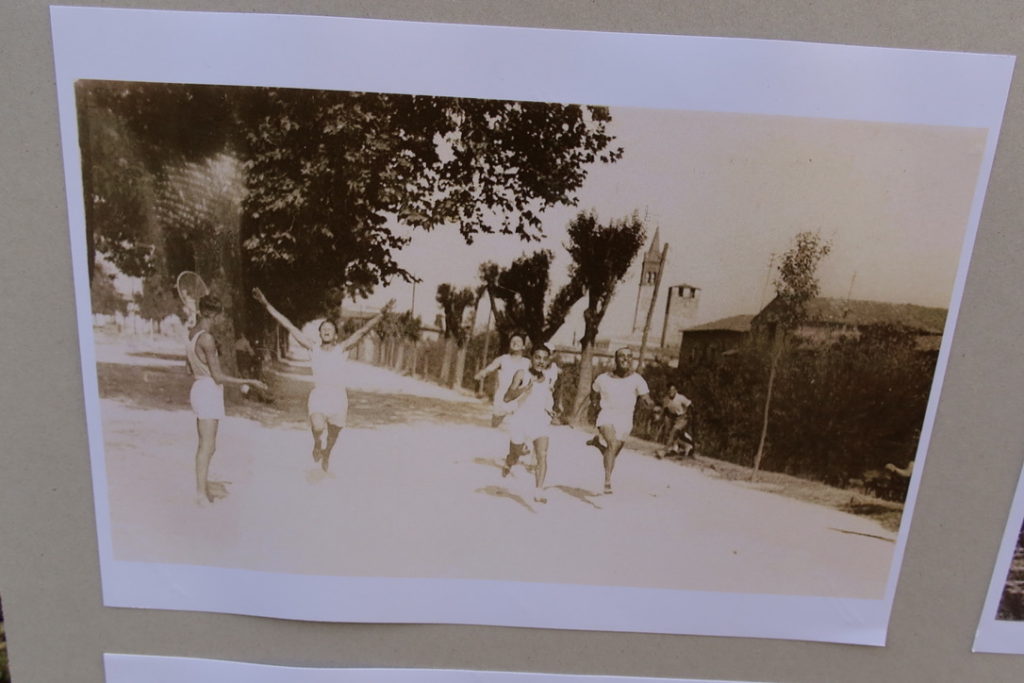
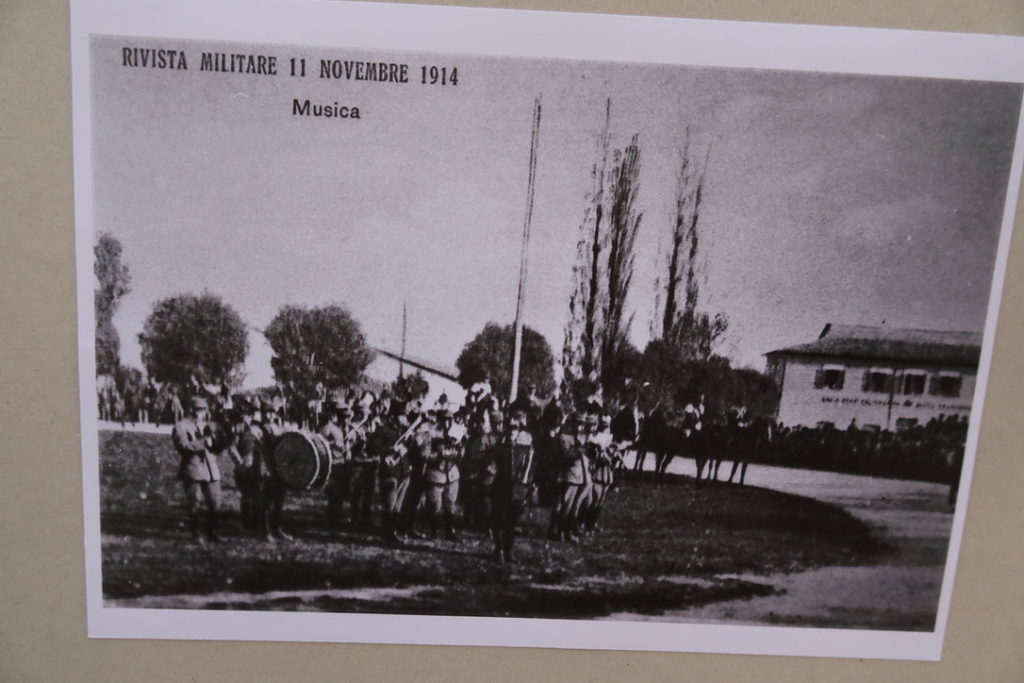
In the last century, the park was used for military exercises and sports events.
Virginia assembled some other interesting facts about the park:
September 14, 1776, the public works department wanted to restore the walls, but the city could not afford it. They went to wealthy citizens, business, and societies for funding. To get the funding, they had to agree to include room for Canapes, which were not little appetizers, but sofa shaped seating made of brick along the sides. There were 80 of them, and they are all numbered. The park is elliptical, and it often served as a racecourse. It was inaugurated in 1778.
In January 1832, after a series of earthquakes and tremors in 1831, many Folignati hunkered down in make-shift shelters in the park and remained there for several months
The trees were planted in 1853
In 1858 a cafeteria was opened inside the tower, there is currently a bar in that area which is open during the summer
1931 public gardens were established
For a period of time there was a small zoo there.
During and after WWII, a section was used as a public vegetable garden
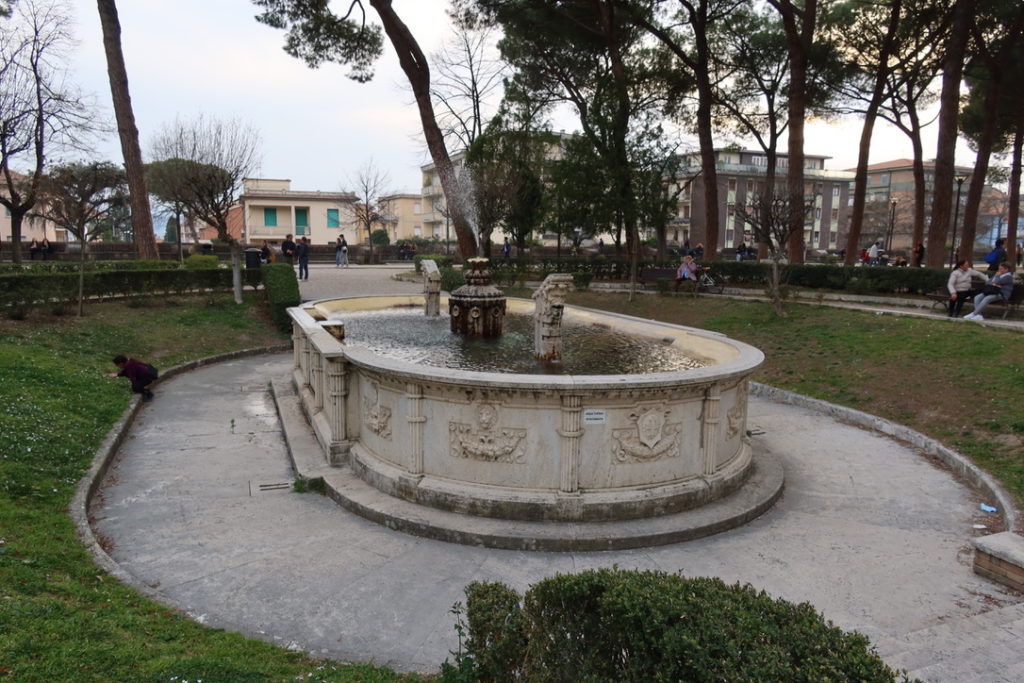
There is a beautiful fountain in the park. It was designed by Nicola Brunelli in 1933. It was originally installed in Piazza della Republic in 1935 but was eventually moved to the park because when the wind blew in the piazza it sprayed water on passers by. Restorations were done in the 1980’s and 1990’s to align the design with the needs of contemporary users.
Recruitment and Selection Center National Army
Caserma Gonzaga di Foligno
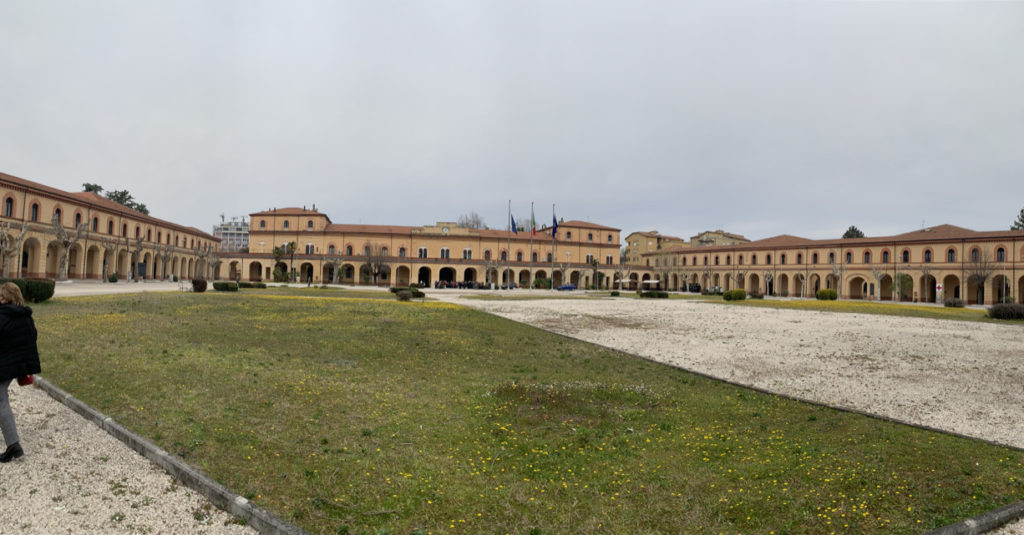
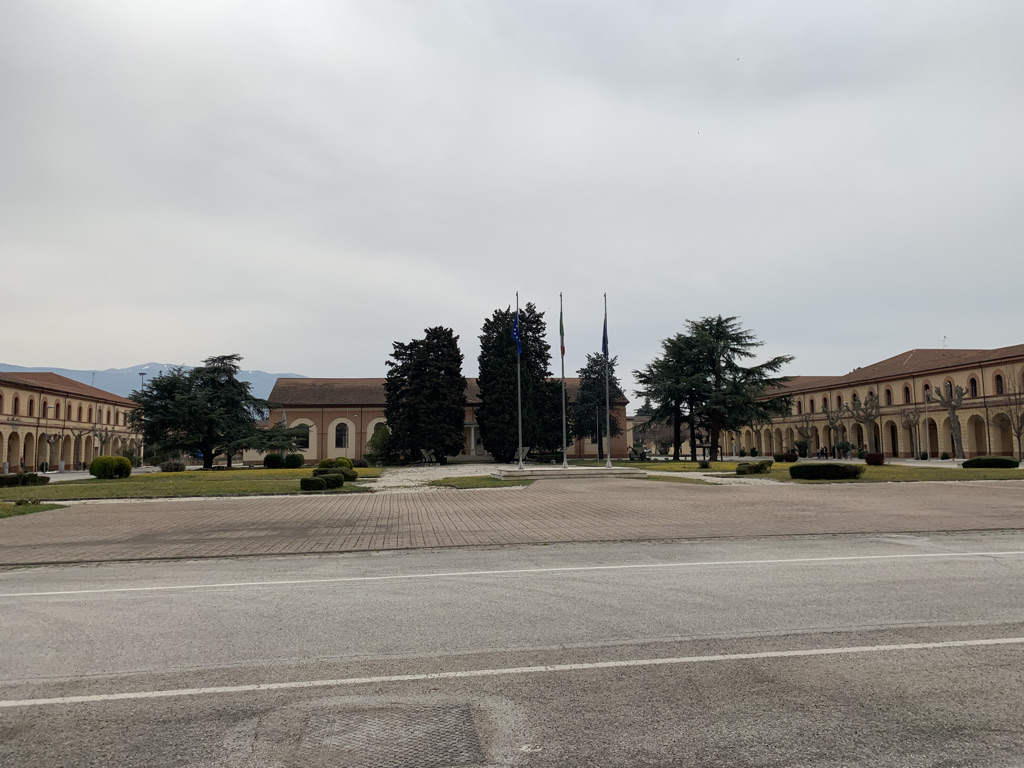
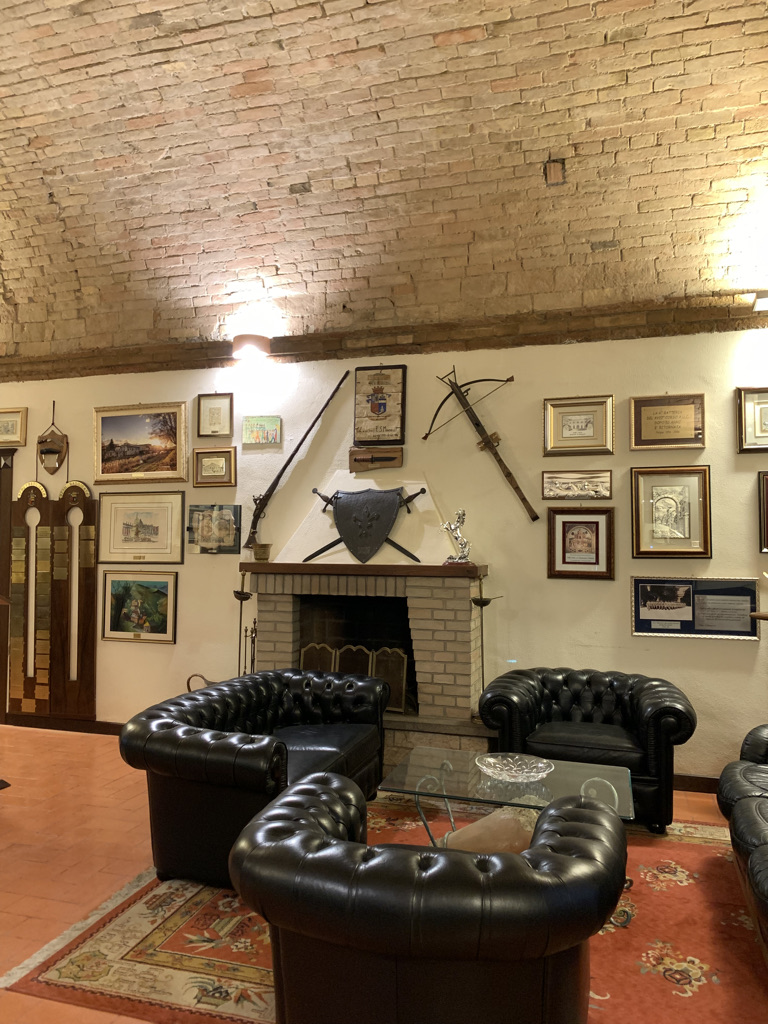
Over the years, we have often seen military cadets walking through the streets of Foligno. Sometimes there are large groups. We knew there was a large military facility just south of the historic center, but we weren’t sure exactly what went on inside its walls. As it turns out, it’s the Caserma Gonzaga which is a huge recruitment and selection center for Italy’s Army.
The Defense Plan of the State 1865 identified Foligno as a strategic location for a military square due to is central position as a road and railway junction , it was in a good place to protect the capital at that time, Florence, and redeploy the newly established Italian Army. Construction began in 1867.
1873 an agreement was signed between the ministry of war and the municipality of Foligno to build the barracks. The town gave the land, and additional funding came from various private source and the Society for the Construction of the Barracks. It took 10 years to build and was designed by Architect Giovanni Castellazzi.
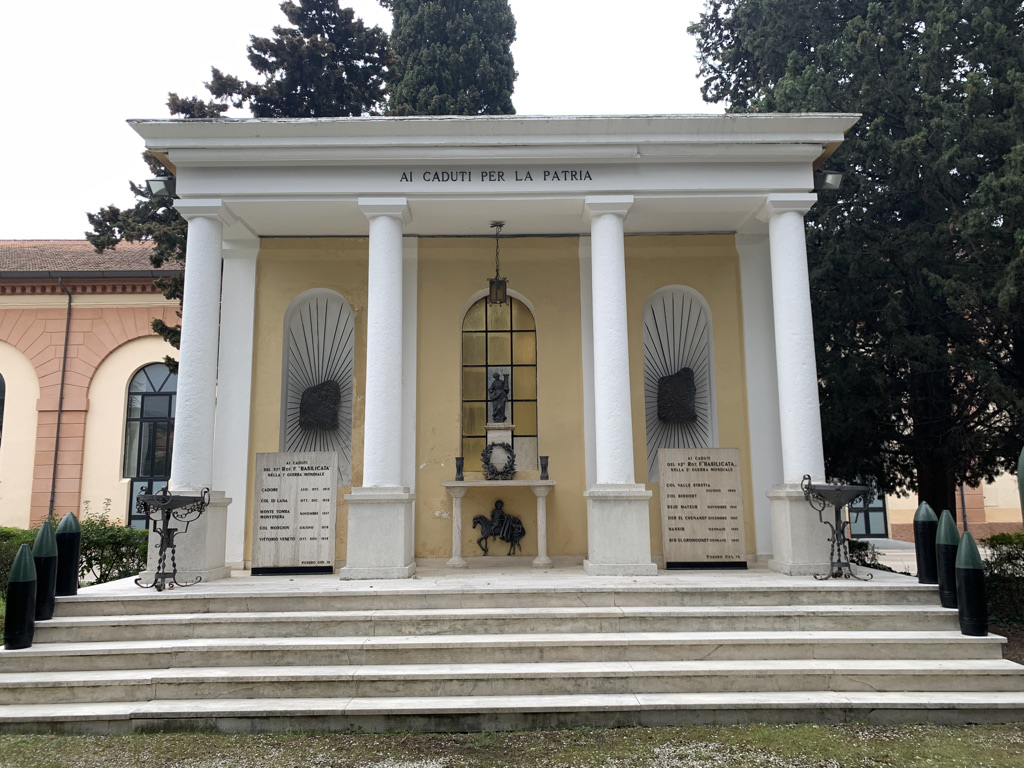
Monument to the fallen in service of the country
On October 1, 1996 the Caserma became the National Army Selection and Recruitment Center for the Italian Army. The classrooms can welcome up to 400 candidates per day and has a sports area, an indoor gym, medical clinics, areas for psychological and aptitude tests, and a cafeteria.
70,000 candidates usually come to Foligno each year. In 2020 the number of candidates dropped to 35,806.